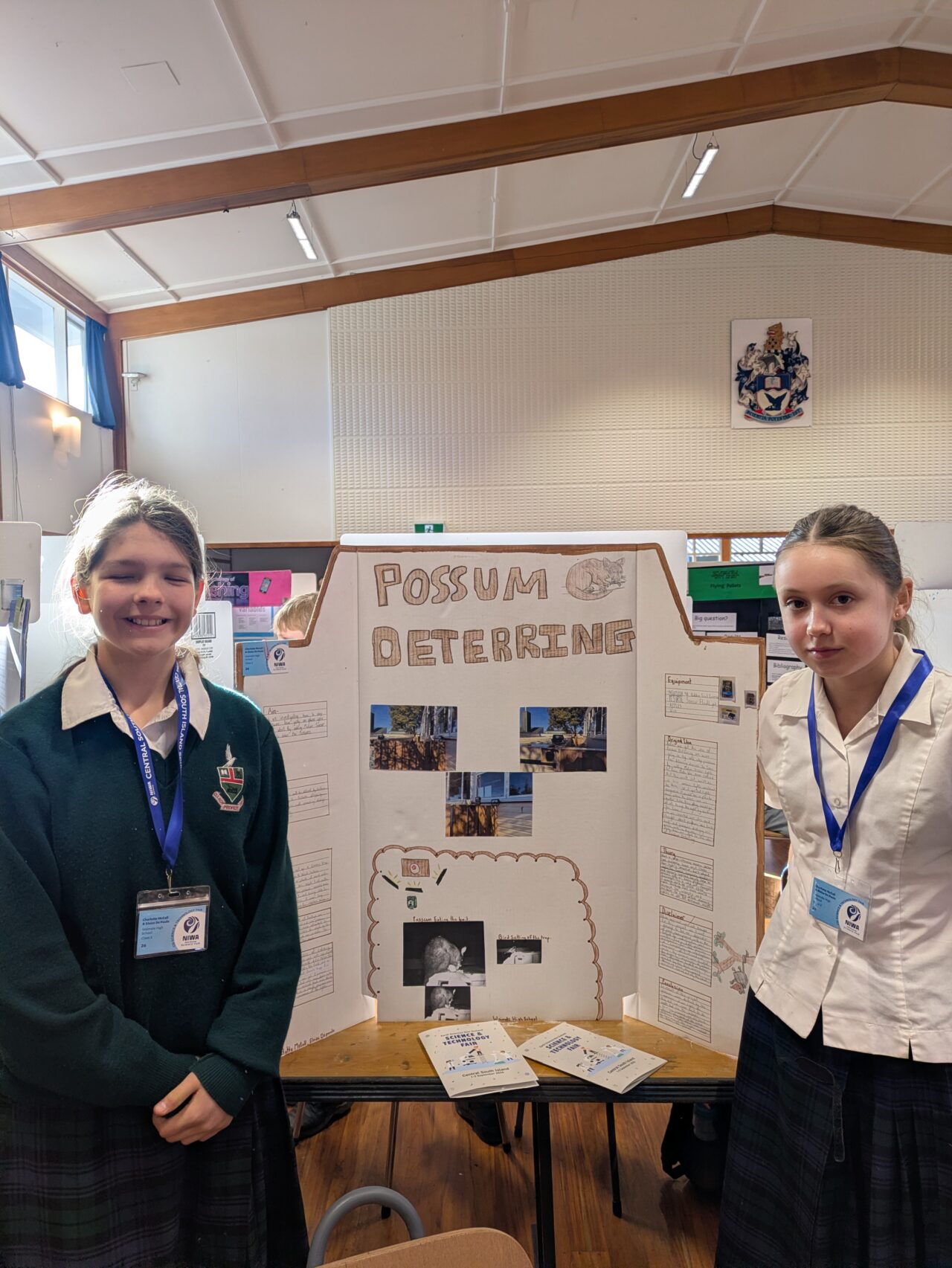
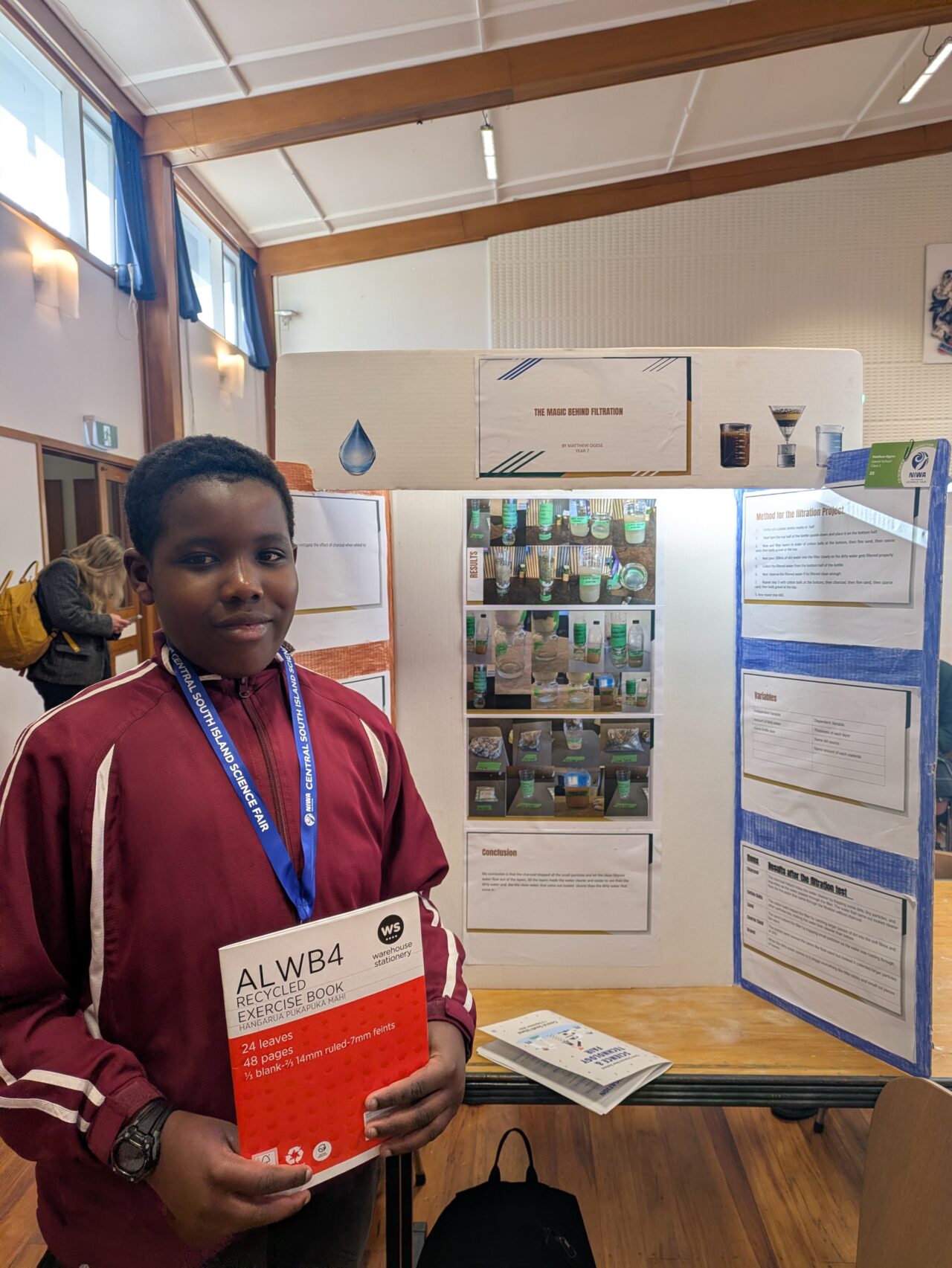
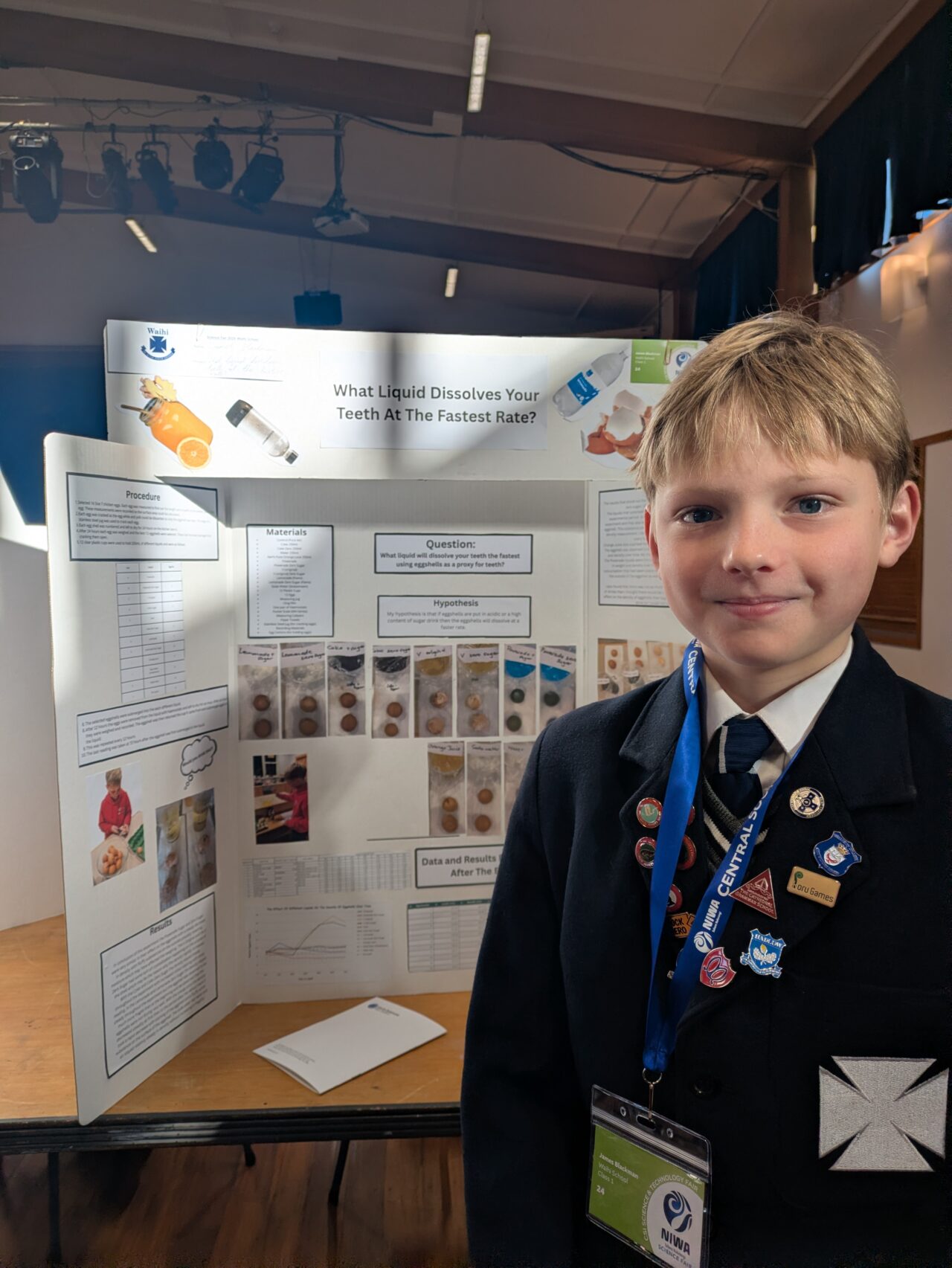
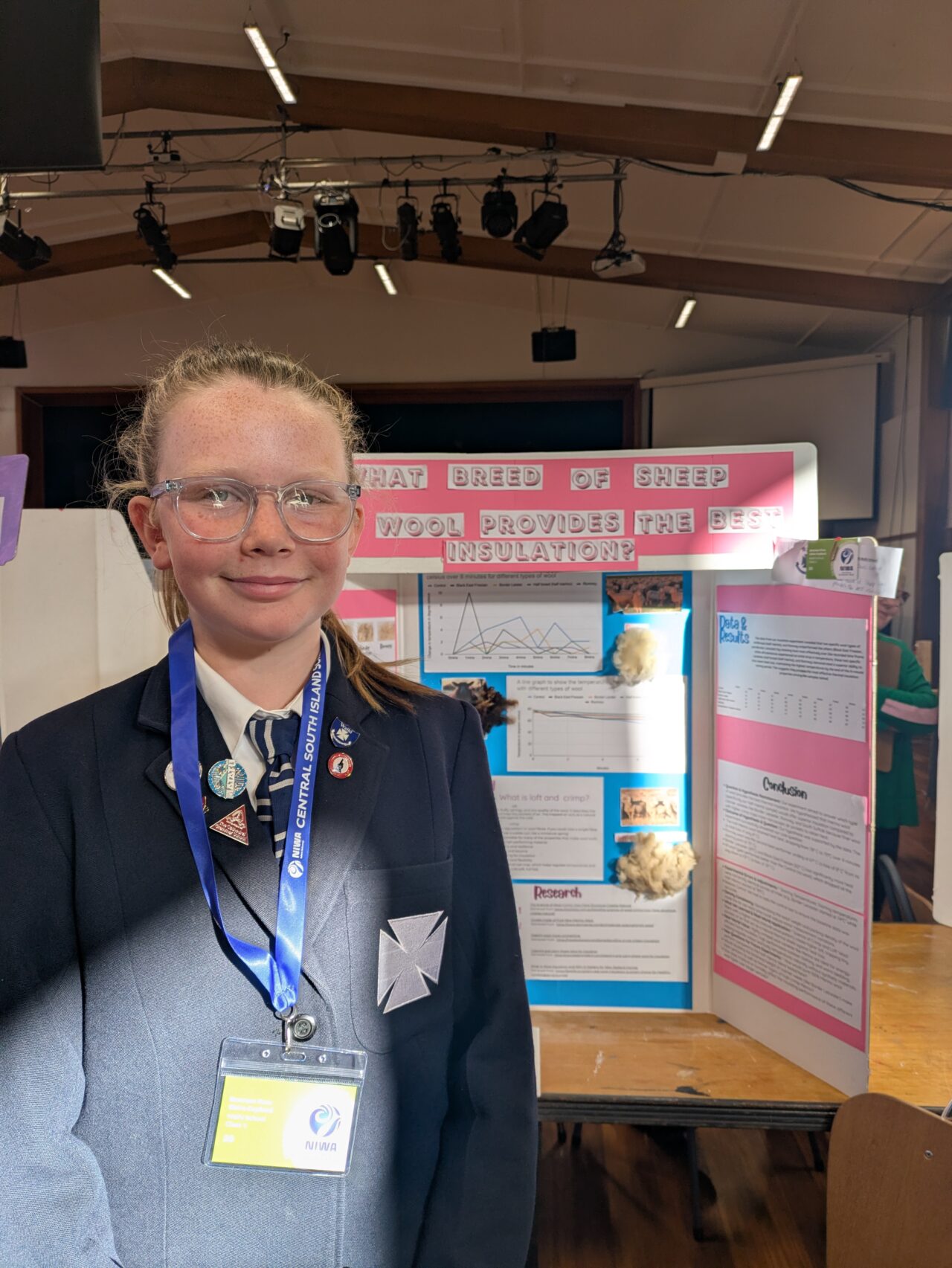
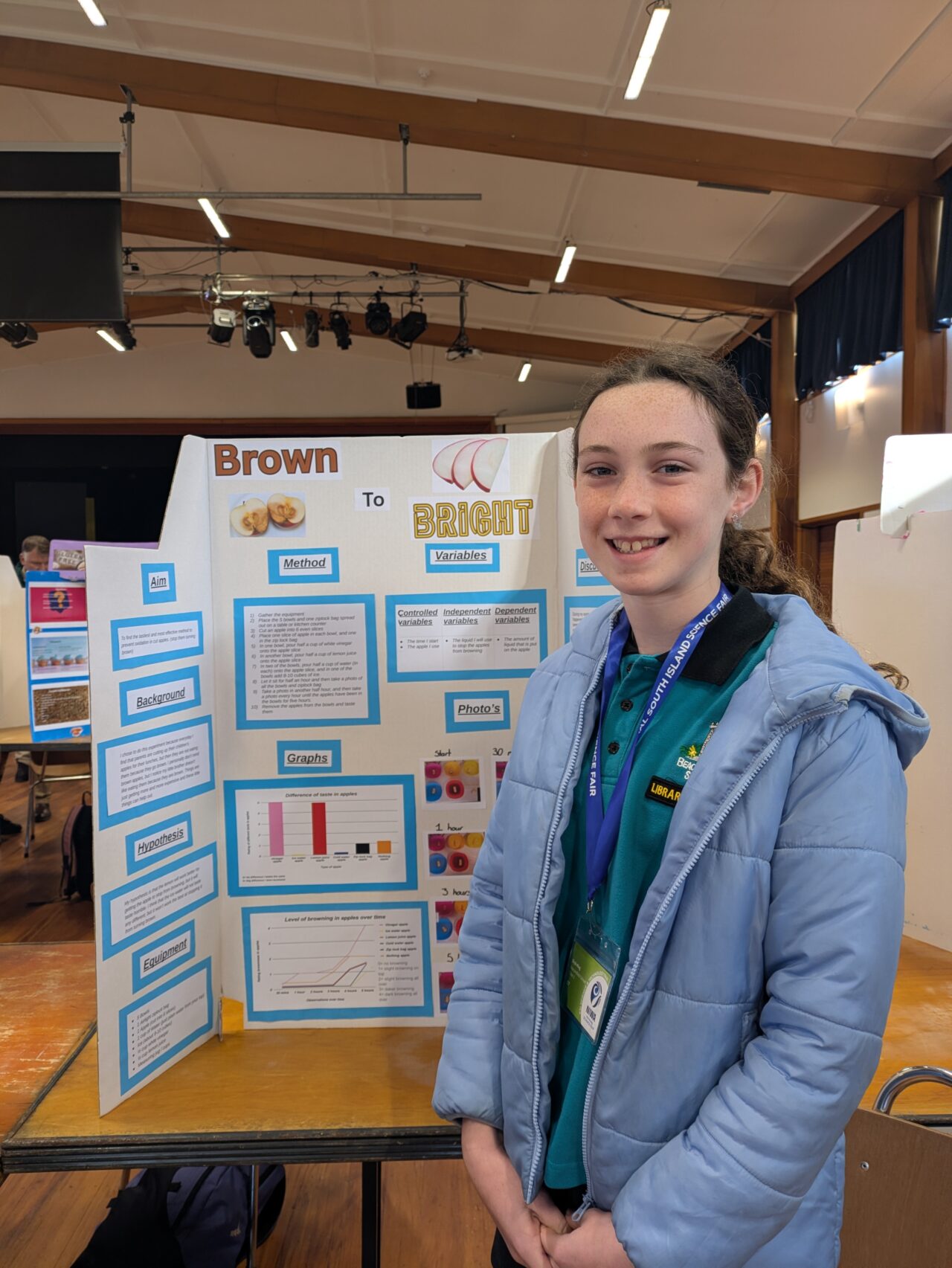
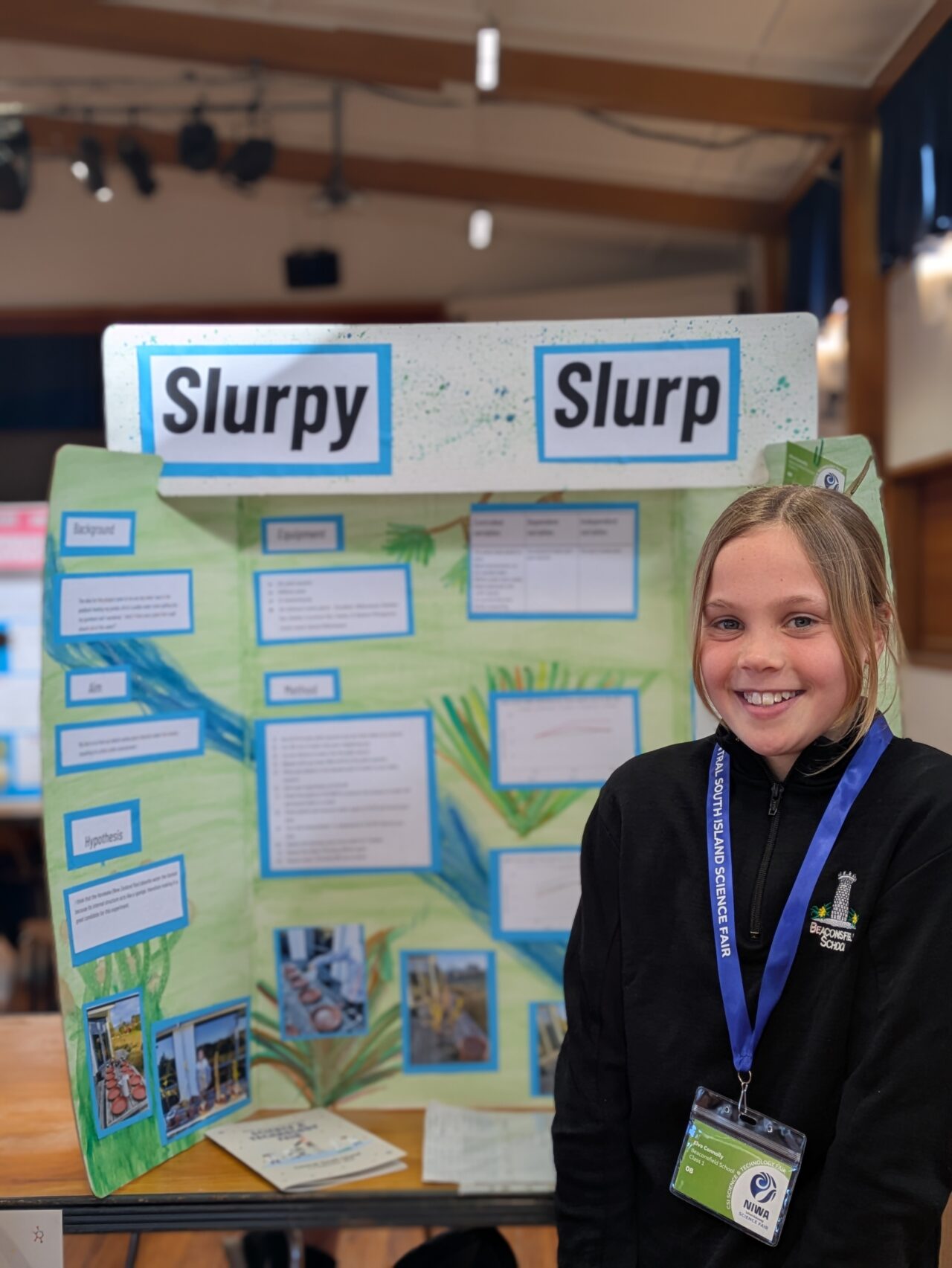
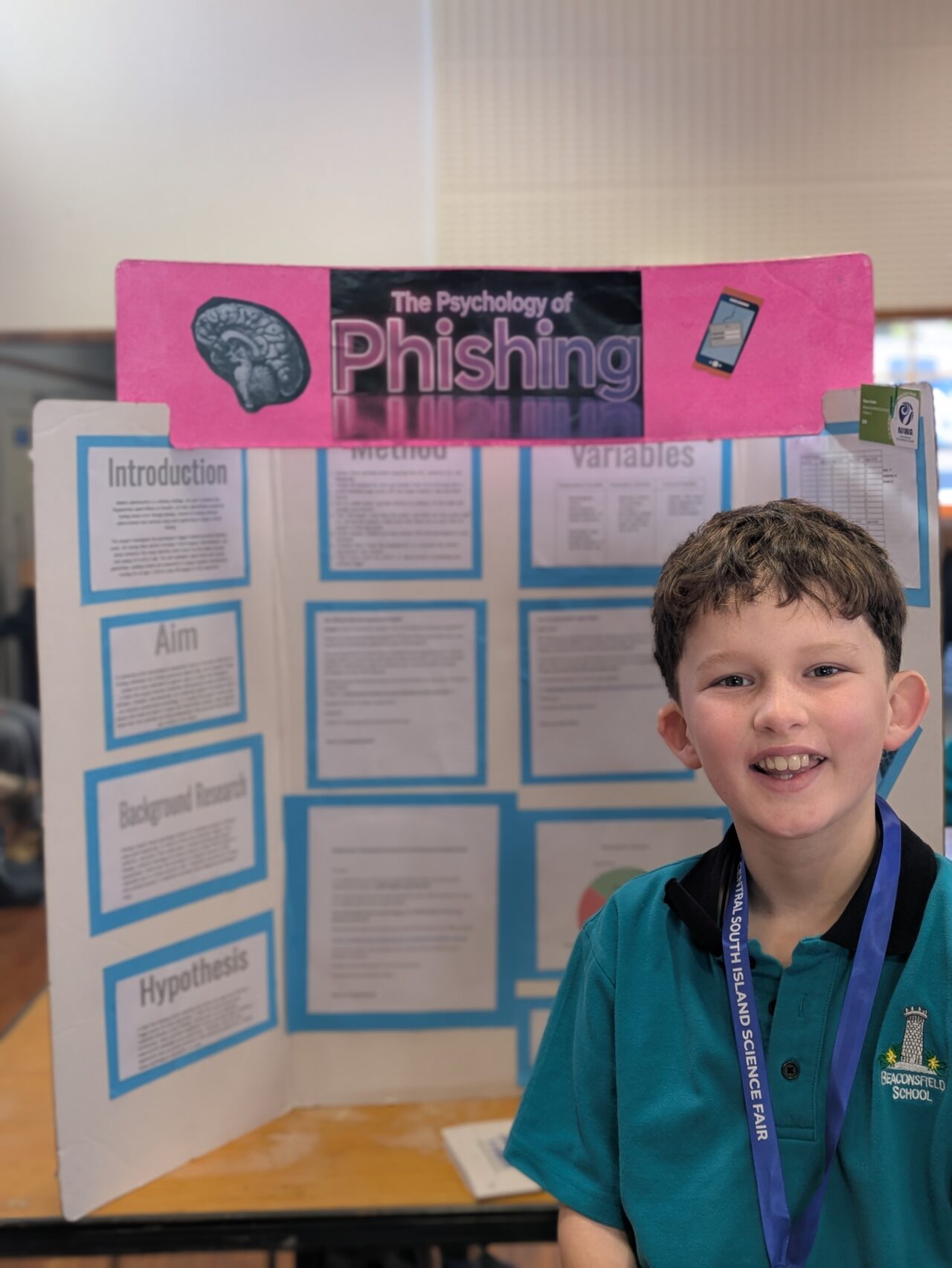
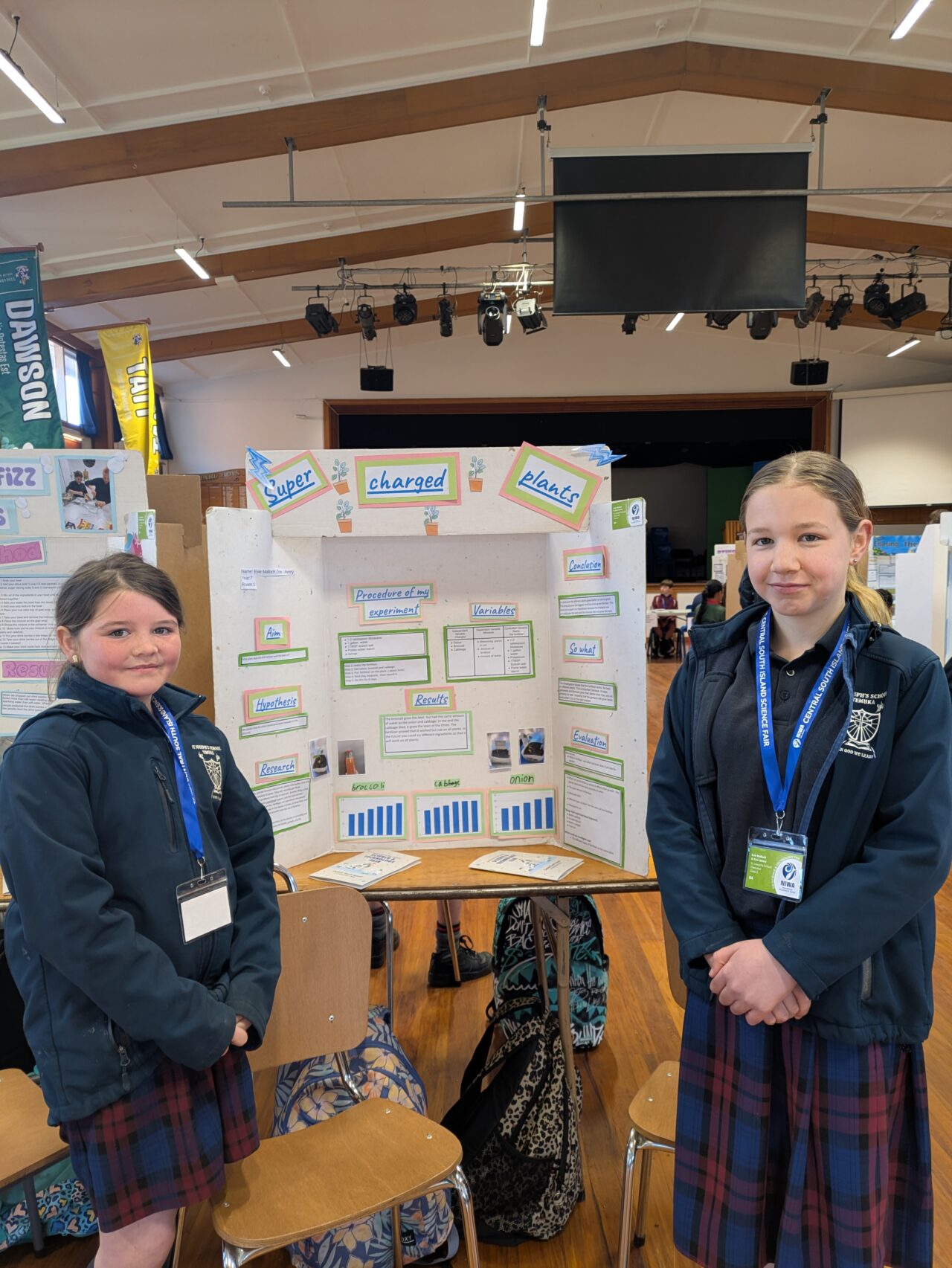
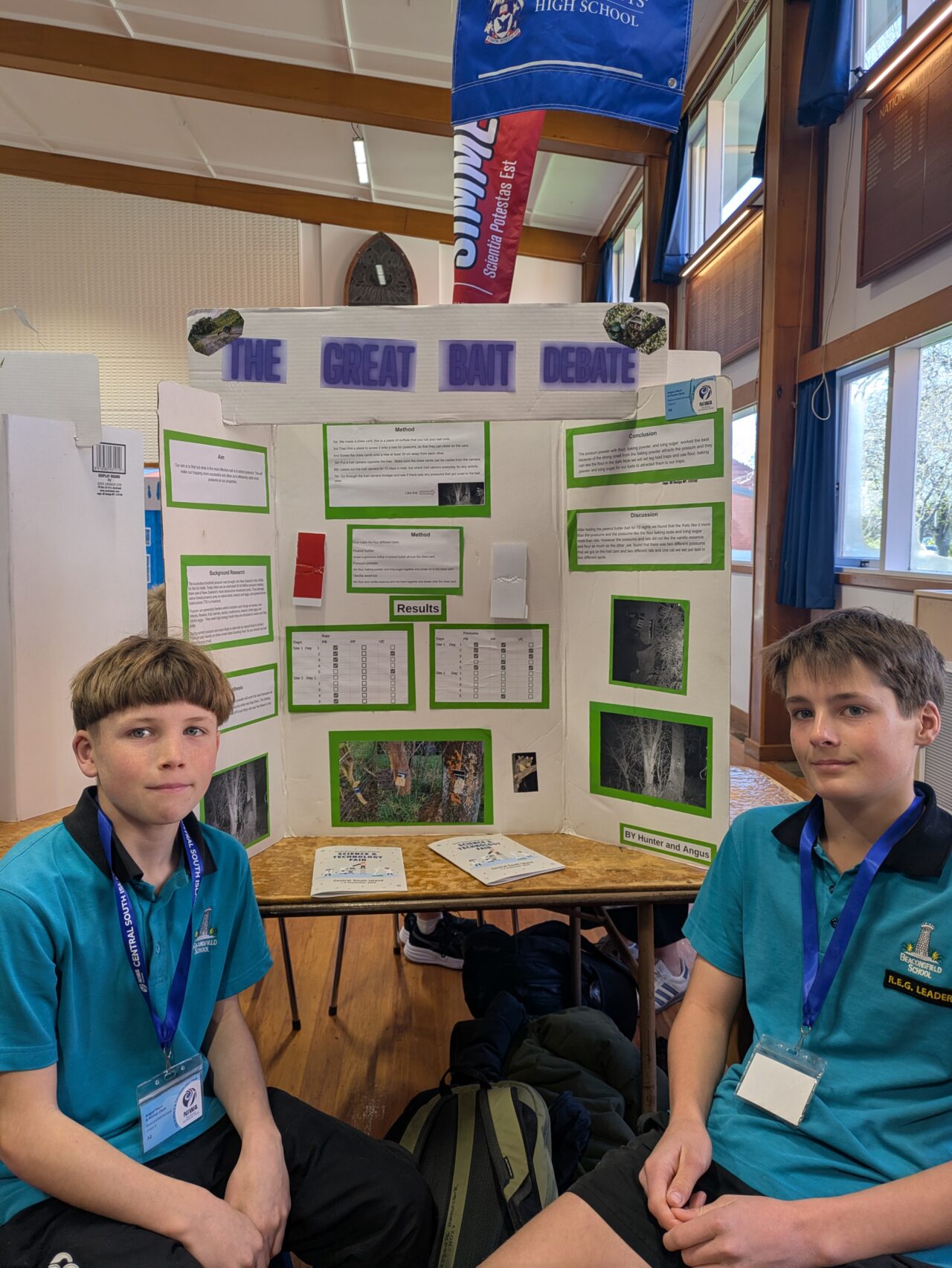
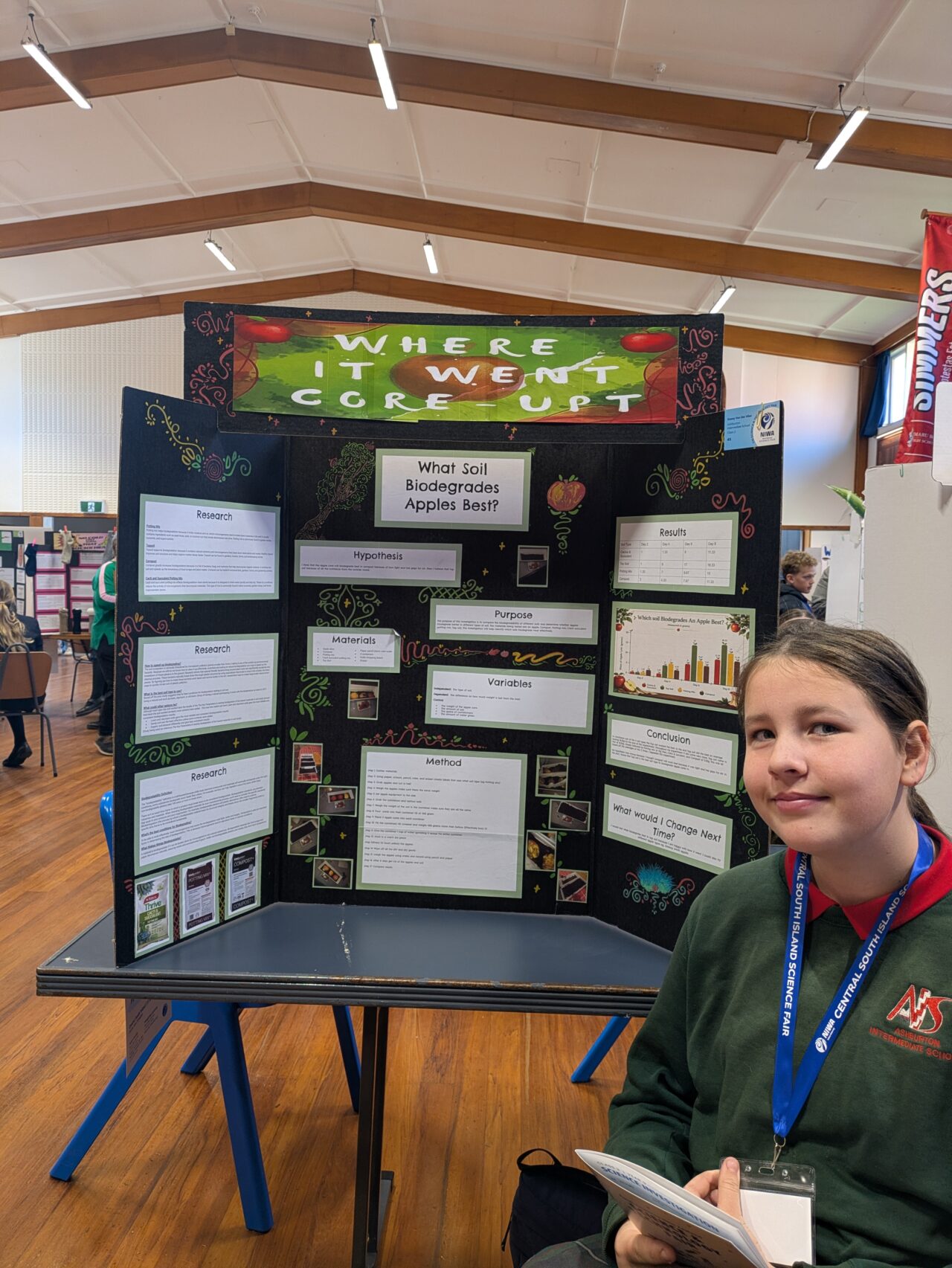
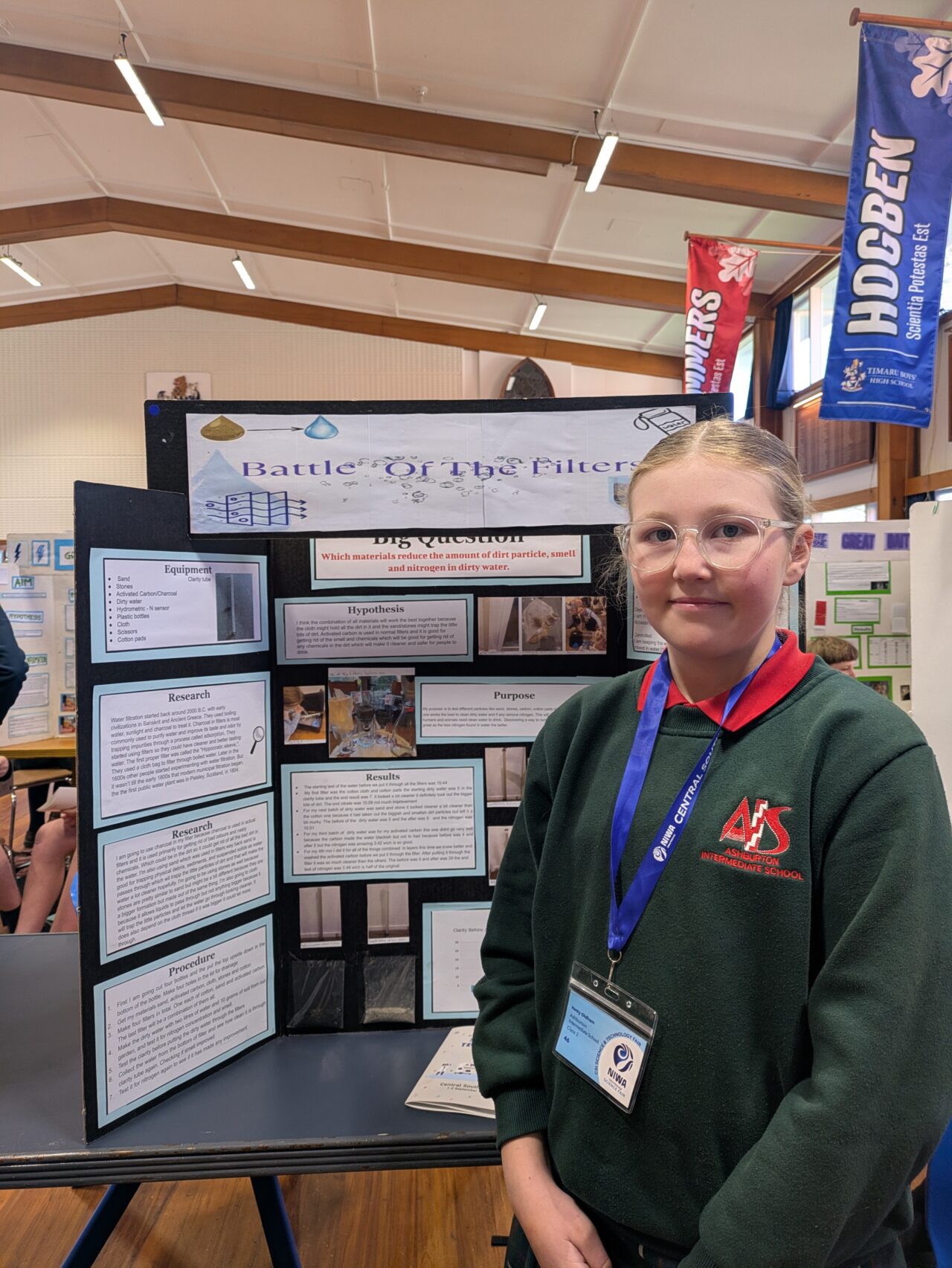
The NIWA Central South Island Science and Technology Fair is a regional event where students from Years 7 to 13 present original projects in science, technology, and innovation. The fair offers a supportive space to investigate real-world problems, develop solutions, and communicate ideas.
Supported by NIWA as our principal sponsor, and with support from schools, families, and the wider community, the fair helps students grow as thinkers, creators, and future leaders.

The fair is open to students in Years 7–13 from schools in the Central South Island region. All entries must be submitted through a participating school.
Let your science teacher know you’re interested in entering. They’ll confirm your school is registered and help guide your project.
Pick a topic that interests you — a question to investigate, a problem to solve, or something you want to create. Your teacher can help make sure your project follows the rules.
Your school will complete the official entry form on your behalf. This includes your name(s), year level, project title, and category.
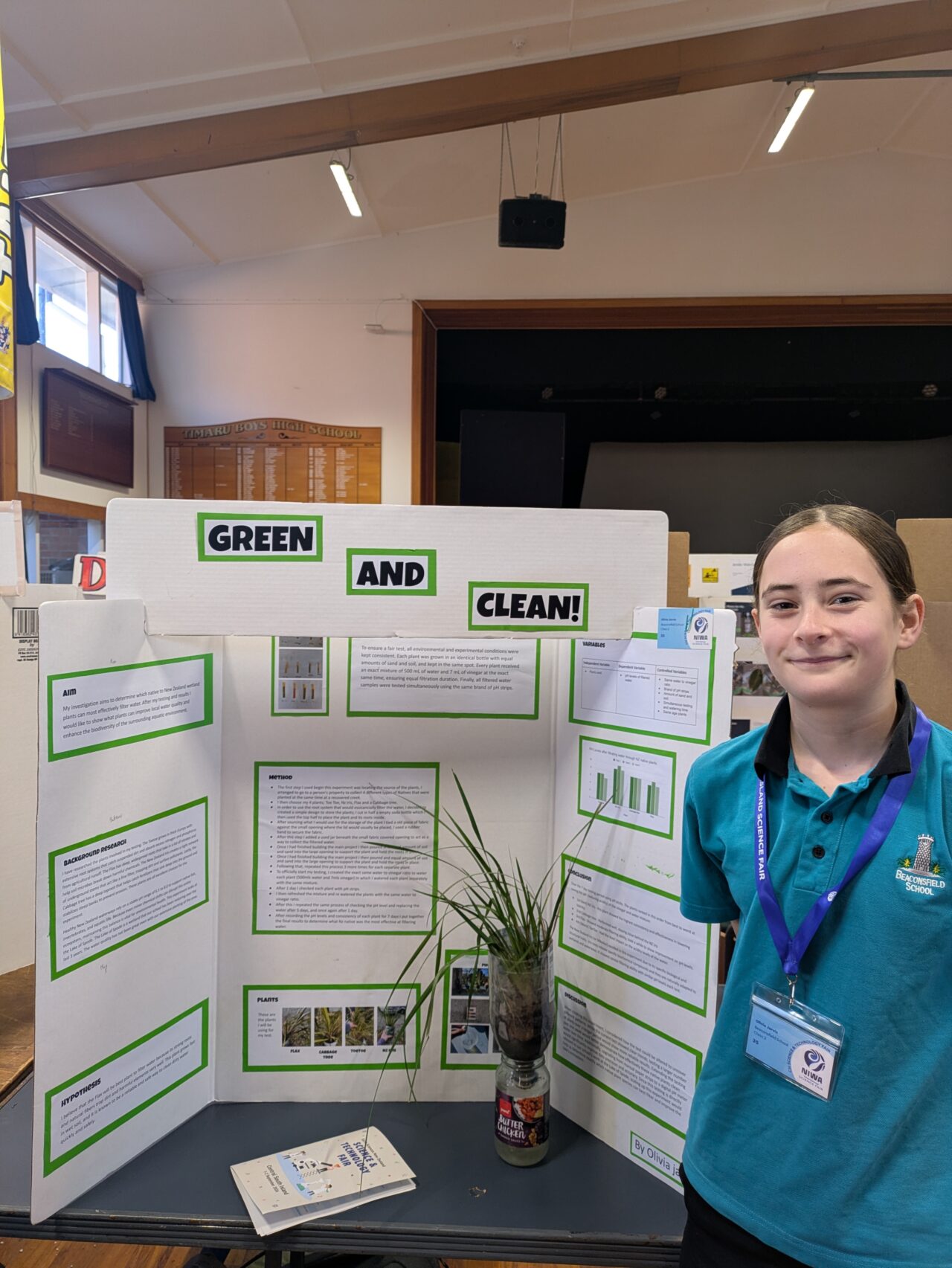
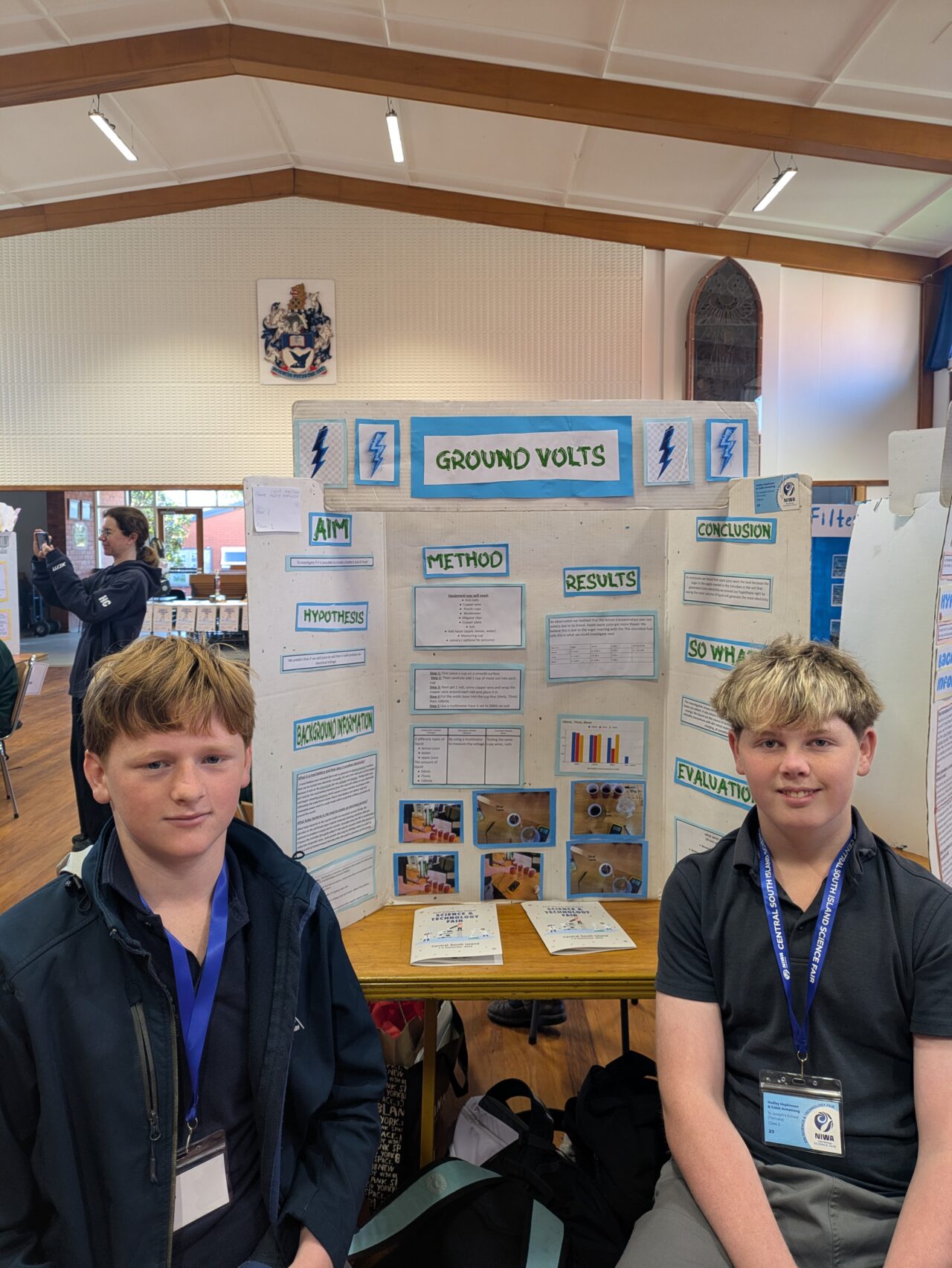
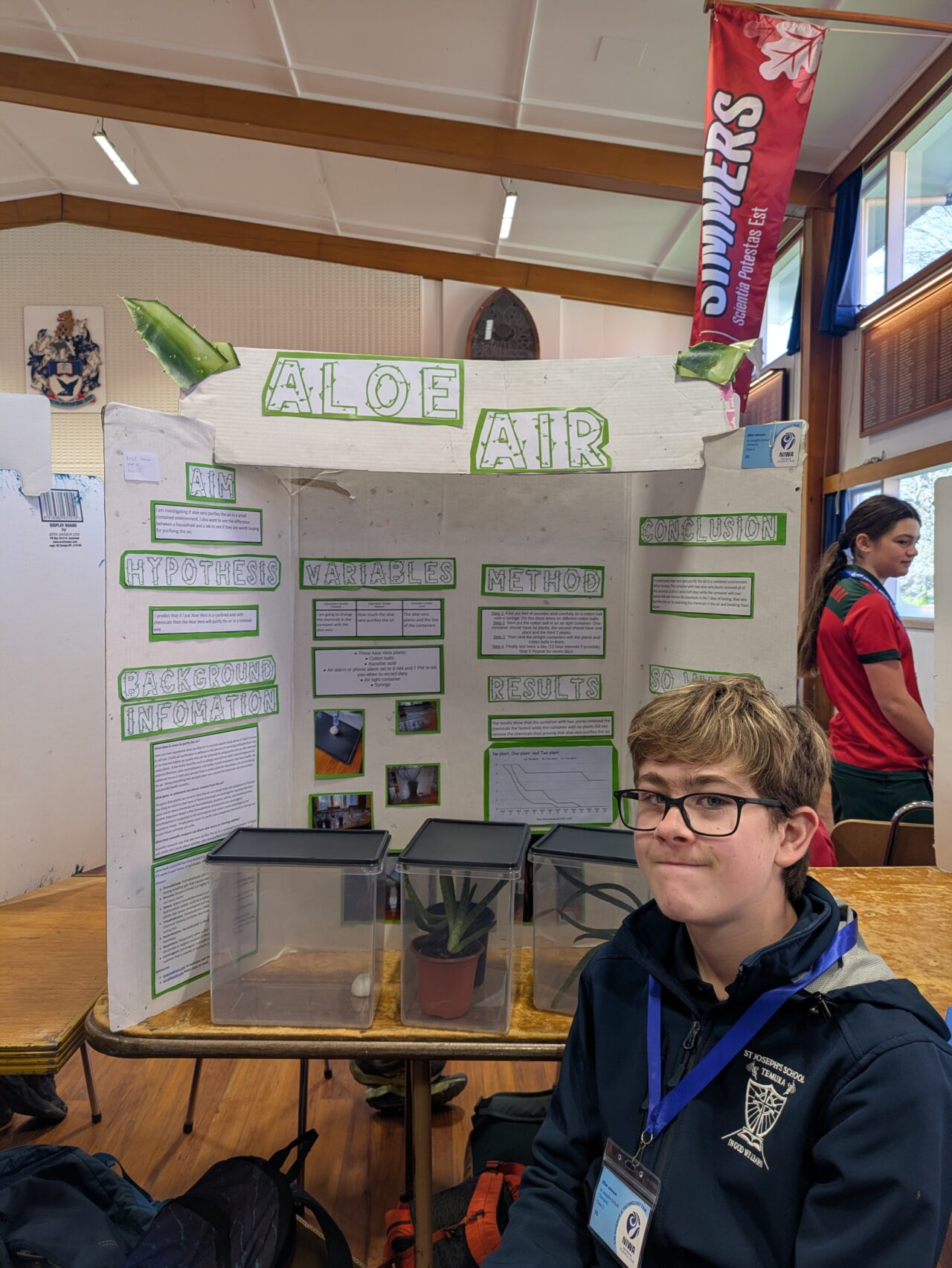
Create a display board that clearly explains your project — what you did, how you did it, and what you found out. Be sure to include charts, photos, or models if needed.
Create a display board that clearly explains your project — what you did, how you did it, and what you found out. Be sure to include charts, photos, or models if needed.
Students can enter their projects in one of four main categories, each designed to match different interests and ways of exploring the world. Whether you’re testing an idea, building a solution, or observing the environment — there’s a category for you.
For more information, please download the Student’s Guide to NIWA Central South Island Science & Technology Fair.

LIVING WORLD includes topics such as: Horticulture (Science of growing plants), Forestry, Plants, Animals, Marine Studies, Conservation, Agriculture, Human Behaviour, Animal Behaviour and Health.
MATERIAL WORLD includes such topics as: Chemistry, Metals, Corrosion, Chemical Product Testing, Fabrics and Chemical Change.
PHYSICAL WORLD includes topics such as: Electricity, Light, Heat, Material Strength, Insulation, Magnetism, Speed and Friction.
PLANET EARTH AND BEYOND includes: Geology, Soils, Pollution, Astronomy, Climate Change, Resource Extraction, Environmental Sustainability and Weather.

Inventions and innovations are applications of science and technology which solve a problem.
For this class you are asked to apply your knowledge to make a device that has a practical application. The steps and stages in development should be recorded so that it is clear how you overcame any problems that were encountered. You will also need to discuss the scientific principles and ideas used in solving the original problem that was identified.
Originality and creative thought are important aspects of this Class. Exhibitors will use the standard display board to present their invention/technical innovation.

Suggestions:
Judging Criteria: Drawings should feature a centred biological name (genus and species) as the heading, and a scale bar based on accurate ratios. Use a sharp pencil to create a large, centred illustration with no labels, using stippling (not shading or solid lines) to show dark areas. Only draw what is visible, and attach a reference photo of the specimen to the back—this can come from a book or website, but the true scale must be shown.

Suggestions:
Be creative and explore. This British Science Week article is very useful.
Judging Criteria: Projects should clearly explain scientific ideas using the student’s own words, not AI or copied content. Displays must be eye-catching, easy to read, and balanced with relevant, clearly labelled graphics. Judges also look for concise text, accurate science, and a clear structure using headings.
The essential feature is the manner in which you investigate the ‘idea’ or develop the ‘device’.
Judges value clear, well-laid-out display boards and detailed logbooks that show your process. Your work must be your own; originality and honesty are key to a fair assessment.
Use brief concise statements under headings. People will not read more than about 200 words. Present data in graphs rather than tables. Use diagrams and photos. Use colour, arrange logically, and ensure that it is readable from 1 to 2 metres.
Each exhibit must be displayed on a display board no larger than 1.0 m high, 0.50 m deep and 1.00 m wide when set up for display. It must be self-supporting and not attached to the table or walls. Display space is limited so please respect these regulations.
Present background research, observations, results, repeat trials, tables of data, construction details, prototypes and other details too extensive to display on the backboards.
Field or laboratory work unable to be displayed should be photographed and included in your logbook or on the display board.
All work must be your own. You may seek advice and guidance from teachers, reference material, and other people or resources and you may borrow or purchase special components, but the major construction must be your own. Help from other people, references and resources must be acknowledged on the display or in the logbook.
Simple, ingenious, original, and inexpensive exhibits are just as likely to be favourably considered as exhibits with a high content of expensive or special components, (such as electronics and computers).
A Science project must illustrate or investigate some scientific idea rather than be just a simple collection, e.g.: an insect collection may be arranged to show the principle of adaptation… that insects have different methods of feeding, thus reducing competition.
Scientific ideas may be investigated by means of a fair test that involves some or all of the following steps:
Headings for an investigative science exhibit may include some or all of the following:
A technology project must develop a new prototype or model, product, device, process, system or environment.
The following steps may develop a technological solution:
Headings for a technology exhibit may include some or all of the following:
A technology project must develop a new prototype or model, product, device, process, system or environment.
Use brief concise statements under headings. People will not read more than about 200 words. Present data in graphs rather than tables. Use diagrams and photos. Use colour, arrange logically, and ensure that it is readable from 1 to 2 metres.
Each exhibit must be displayed on a display board no larger than 1.0 m high, 0.50 m deep and 1.00 m wide when set up for display. It must be self-supporting and not attached to the table or walls. Display space is limited so please respect these regulations.
Present background research, observations, results, repeat trials, tables of data, construction details, prototypes and other details too extensive to display on the backboards.
Field or laboratory work unable to be displayed should be photographed and included in your logbook or on the display board.
All work must be your own. You may seek advice and guidance from teachers, reference material, and other people or resources and you may borrow or purchase special components, but the major construction must be your own. Help from other people, references and resources must be acknowledged on the display or in the logbook.
Simple, ingenious, original, and inexpensive exhibits are just as likely to be favourably considered as exhibits with a high content of expensive or special components, (such as electronics and computers).
All criteria are judged in relation to the age of the exhibitor(s), and the resources and facilities available to them. Original work is more favourably considered than direct copying from books, or obtaining substantial help from other people. You can achieve this by:
Your exhibit – display board, log book and items on display – must tell the complete story to the judges.
Certificates for Animal Ethics Approval, if applicable, must be available for inspection.
Science involves validating experiments that lead to the gathering of data to support or refute the hypothesis or to further investigate the aim or seek answers to questions.
A science exhibit should demonstrate clear scientific thought and the application of appropriate scientific methods. It should show evidence of appreciation for accuracy in observation, measurement, data collection, data presentation and reporting; and an understanding of the underlying or related scientific principles embraced within the project.
It should contain
There should be originality in the selection of the topic or statement of the problem. The following aspects should be evident:
Technology involves the development of a useful product, process, or environment. The development should be driven by identifiable human needs.
The project should include sufficient documentation (plans, models, notes, etc.) to verify the development process that has been worked through for a range of technological aspects. At each stage of development, the various prototypes should have been evaluated by valid tests, which measured performance against criteria important to the intended end-users of the ‘product’.
The project should clearly identify the shortcomings of existing ‘solutions’. These shortcomings and/or identified needs should be met in inventive, innovative or original ways. Materials and/or processes should be used in new or more efficient methods to achieve the ‘solution’.
Also see the statement about originality above.
The project must show how the human need (or opportunity) was identified and validated with reference to the end-users’ expectations. Existing solutions should be investigated and their shortcomings identified in relation to the identified need or opportunity and expectations of the users. Information thus gained should be analysed and performance specifications of the ‘solution’ defined from an analysis of the needs and expectations of the users.
The final solution should be judged against the original need or opportunity. How well the ‘solution’ works should be measured tests in relation to the performance specifications. How well it meets the needs of the users should be measured through appropriate tests. Evidence should be provided that the solution meets the needs of the intended users in ways appropriate to the users (it is easy and enjoyable to use.) It should be aesthetically pleasing or this potential should be shown. The ergonomic requirements of a range of people (age. gender, sex) should be considered. Its potential for full-scale use, including key quality control elements, should be evaluated.
Class Prizes |
||
| For Classes 1 - 5 | 1st | $300 |
| 2nd | $250 | |
| 3rd | $200 | |
| 4th | $150 | |
| Note: Honourable Mention certificates and special prizes awarded at the discretion of the judges. | ||
| For Classes 6 -7 | 1st | $200 |
| Runner-up | $100 | |
| For Classes 8 - 11 | 1st | $100 |
| 2nd | $80 | |
| 3rd | $60 | |
Special Prizes (Award Focus and sponsors from previous year as an indication ONLY) |
||
Award Focus |
Sponsor |
|
| Innovation & Environment | Arowhenua | |
| Originality/Inventiveness | Arowhenua | |
| Women in Science | Arowhenua | |
| Environment | Ecan | |
| Water/Atmosphere | Opuha | |
| Statistics | NZ Statistical Association | |
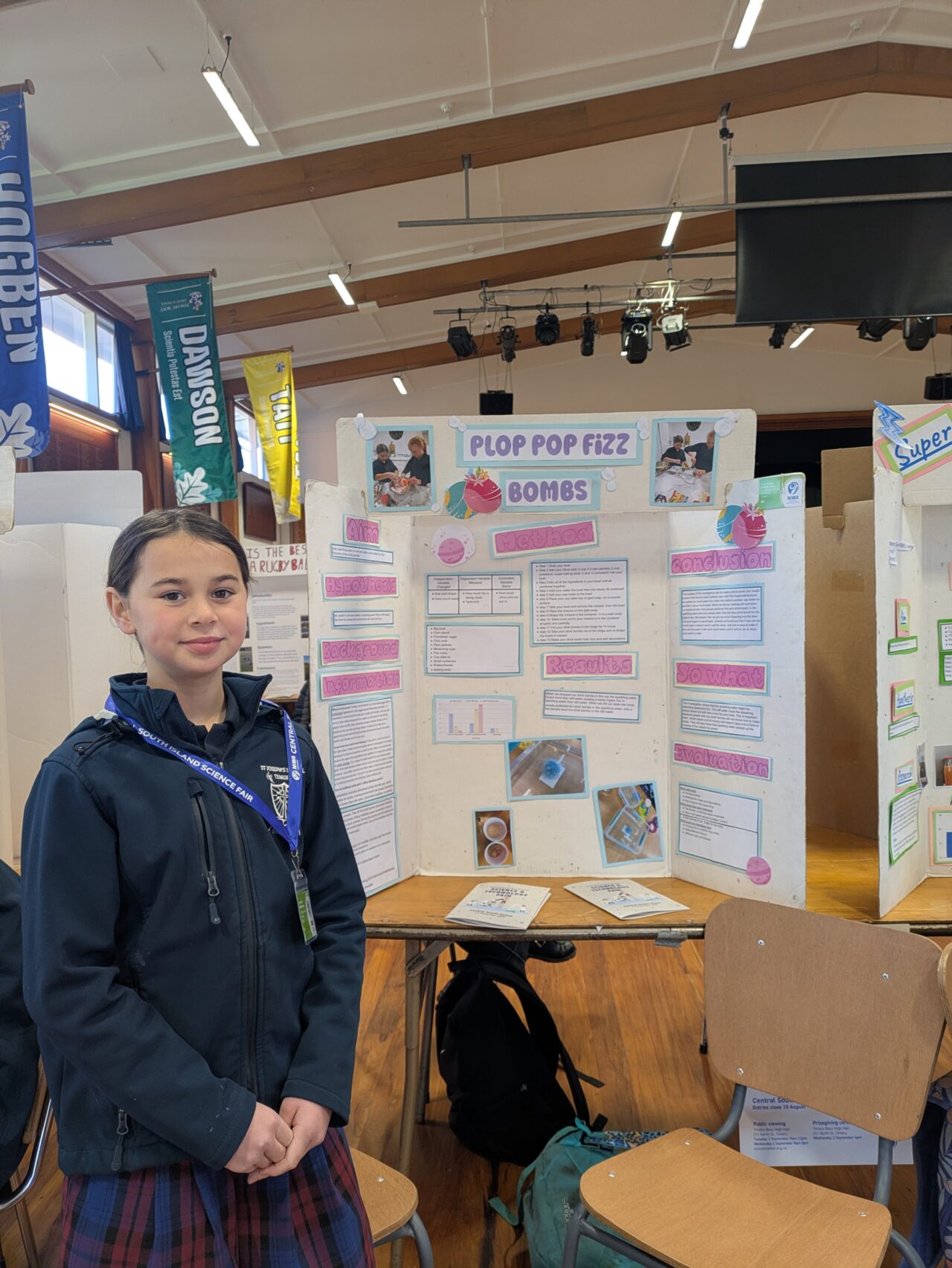
| Food science & technology | Barkers of Geraldine | |
| Baking | NZ Baking Industry Research Trust | |
| Health | ARA | |
| Sport | Science Committee | |
| Animal Health | Aorangi Vet | |
Technology involves the development of a useful product, process, or environment. The development should be driven by identifiable human needs.
The thoroughness of work and effort which has gone into the project should be reflected in the scope of the topic, the scale of the investigation, the detail obtained, the extent of the results, the repetition of the experiments measurements or observations, the construction of the exhibit, and its illustrative items and other displays, and the detail of the written material recorded in a log book.
These will be related to the age of the exhibitor, to the resources and facilities available to them and to the nature of the topic or investigation itself.
The project should be assembled skilfully; equipment and models should be well constructed; graphic materials must be carefully prepared and presented; living plants and animals well cared for; working parts reliable; and the whole display well planned and neatly finished.
The exhibitor(s) should have used their own skills rather than working under expert supervision and demonstrate skilful use and application of techniques or equipment.
The exhibit should be well designed, attractive, visually interesting and informative on all aspects of the investigation; well-illustrated with photographs, models, specimens, or samples; and with wide public appeal and effective communication. There should be a logical sequence, set out clearly and concisely, with all pertinent details displayed in a way which enables viewers to quickly grasp the essentials.
A logbook should provide details to back up the project, but the display must contain all the important details related to the investigation.
The judges will endeavour to interview all exhibitors. If you have not been interviewed as the judging period draws to a close, please notify one of the Organising Committee. However, remember the judges have had a chance to look at your exhibit earlier in the morning so may not need to spend much time with you. Exhibitors must be present for these interviews, so do not stray away from your exhibit to visit friends.
Overall Winners
|
Prize |
Year |
School |
Project Title |
Student/students |
|
1st Place S.R Bennet Trophy |
Year 8 |
Ashburton Intermediate School |
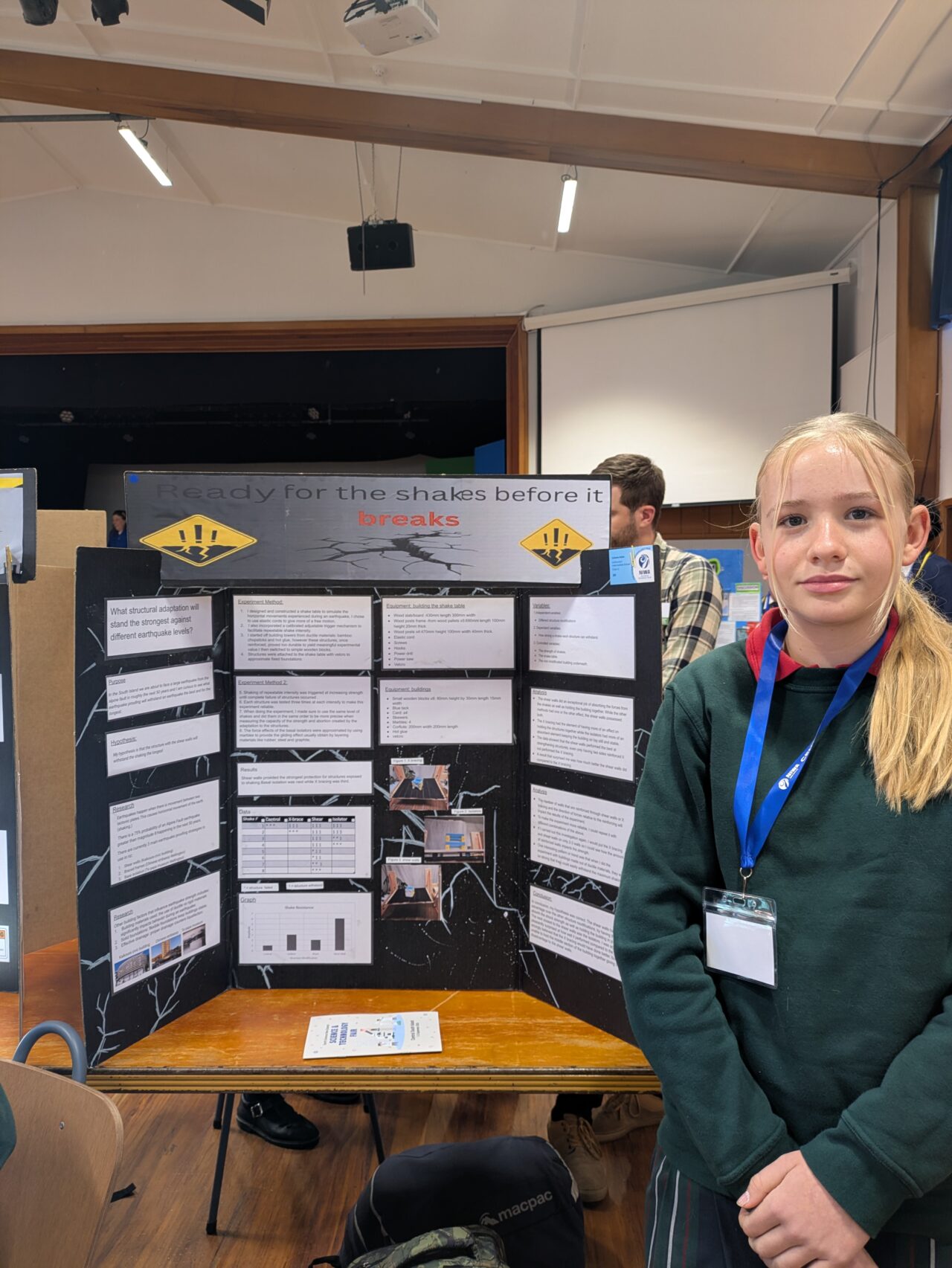
Ready for the Shakes Before it Breaks |
Celeste Hahn |
|
2nd Place Bob Anderson Memorial |
Year 8 |
Mackenzie |
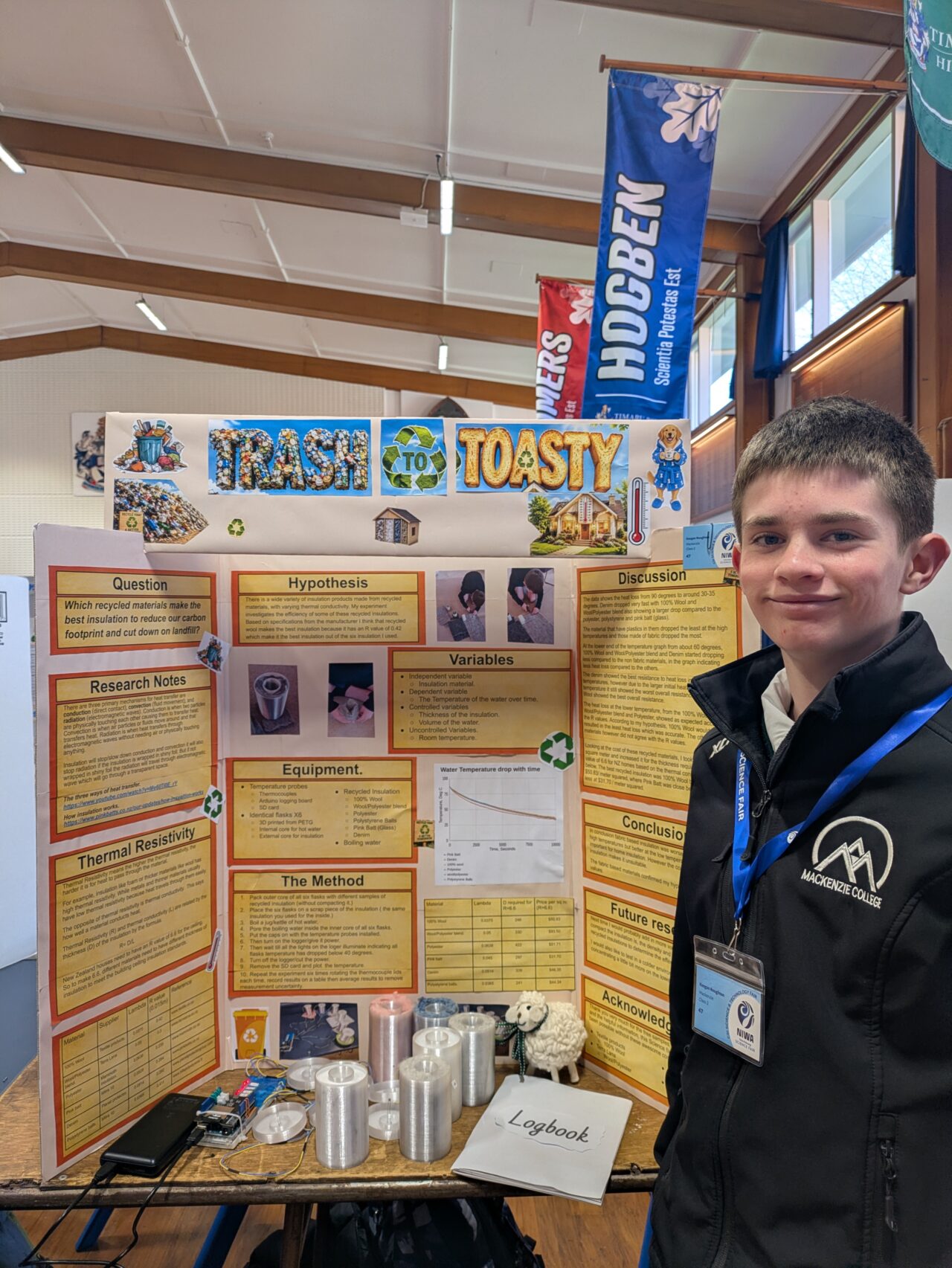
Trash to Toasty |
Keegan Roughton |
|
Prize |
Class / Year |
Name |
Project Title |
School |
|
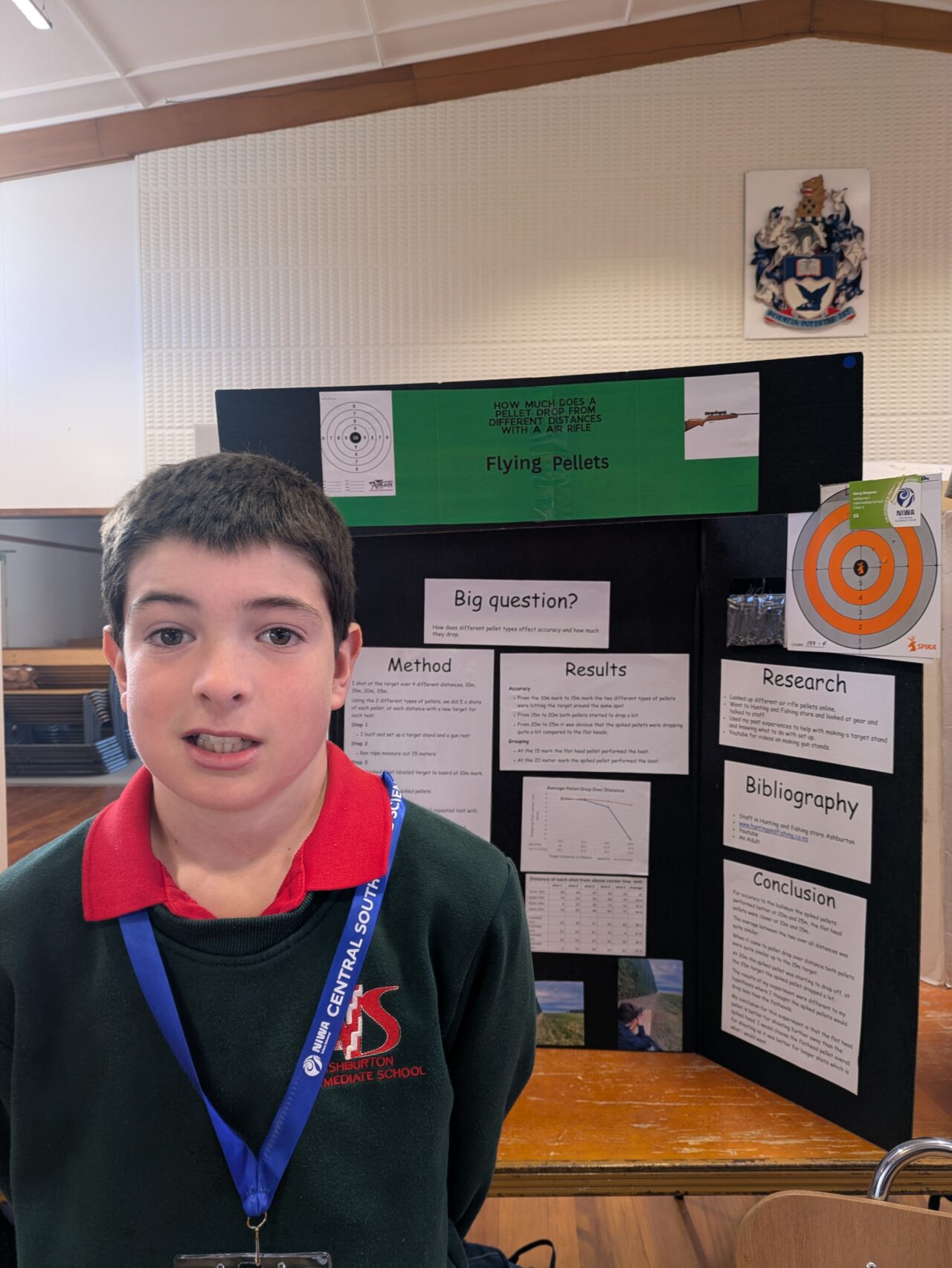
1st |
Class 1 |
Harry Simpson |
Flying Pellets |
Ashburton Intermediate |
|
2nd |
Class 1 |
James Blackman |
What Liquid Dissolves your teeth at the fastest rate |
Waihi School |
|
3rd |
Class 1 |
Zoe Jackson & Annie Scott |
How will the Cookie Crumble |
Craighead Diocesan School |
|
4th |
Class 1 |
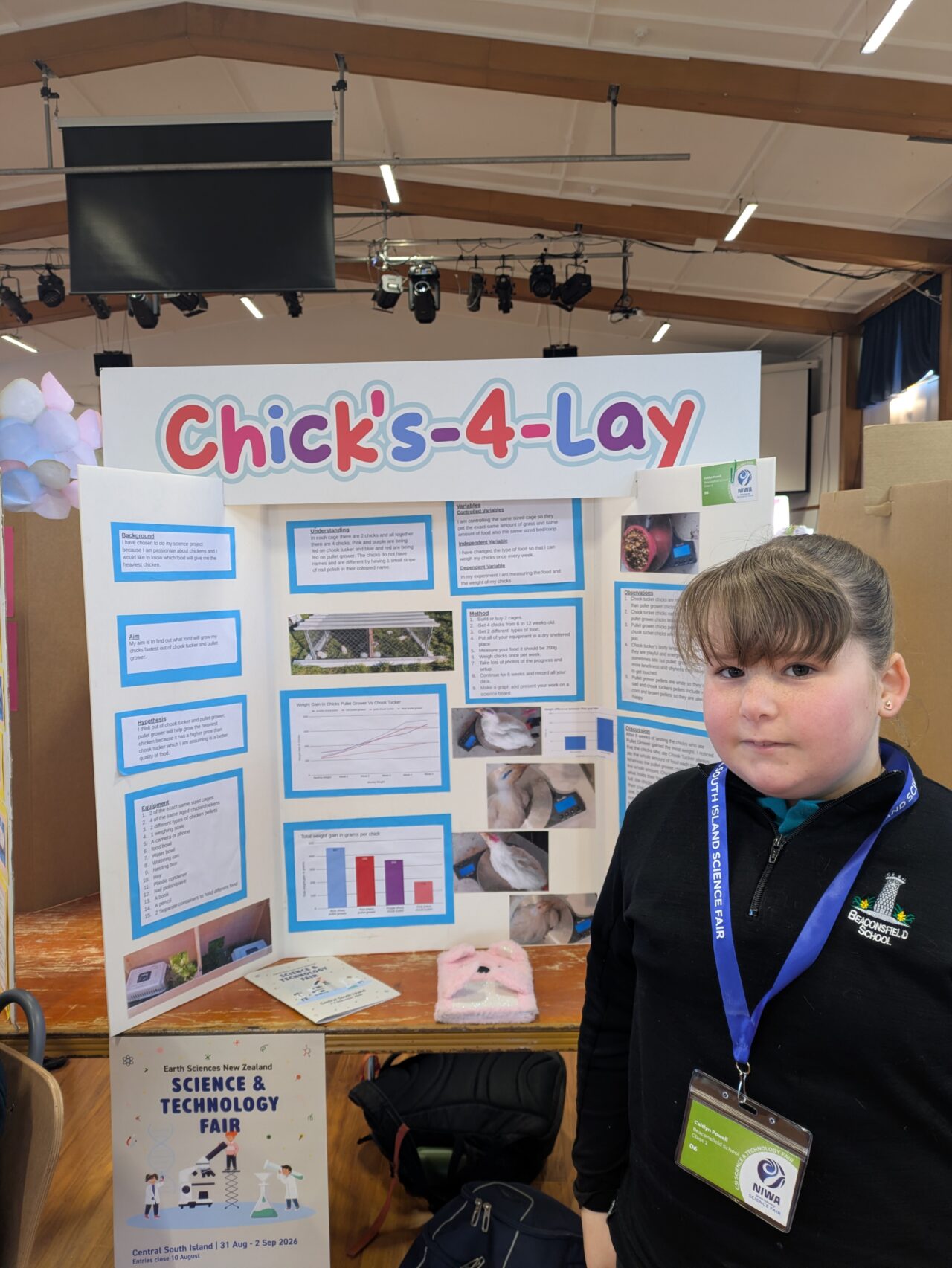
Caitlyn Powell |
Chick’s-4-lay |
Beaconsfield School |
|
1st |
Class 2 |
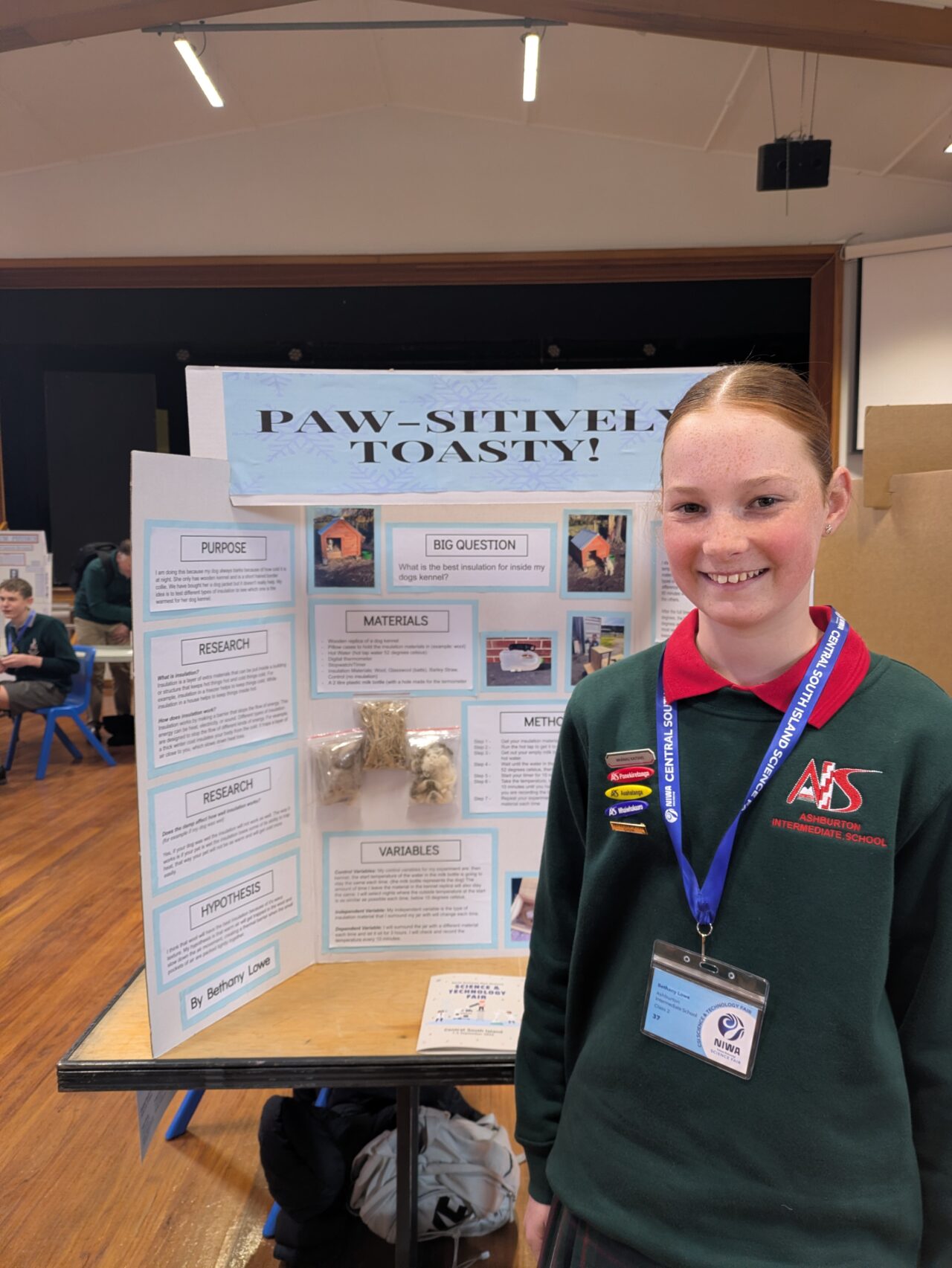
Bethany Lowe |
Paw-sitively Toasty! |
Ashburton Intermediate School |
|
2nd |
Class 2 |
Keegan Roughton |
Trash to Toasty |
Mackenzie |
|
3rd |
Class 2 |
Georgia Guthrie |
Leaf it to Science |
Ashburton Intermediate School |
|
4th |
Class 2 |
Hetty Oldham |
Battle of the Filters |
Ashburton Intermediate School |
|
3rd |
Class 3 |
Kit Inglis |
Hair Today, Gone Tomorrow |
Craighead Diocesan School |
|
2nd |
Class 4 |
Charlotte Walker |
Don’t Believe Your Eyes |
Ashburton Christian School |
|
1st |
Class 5 |
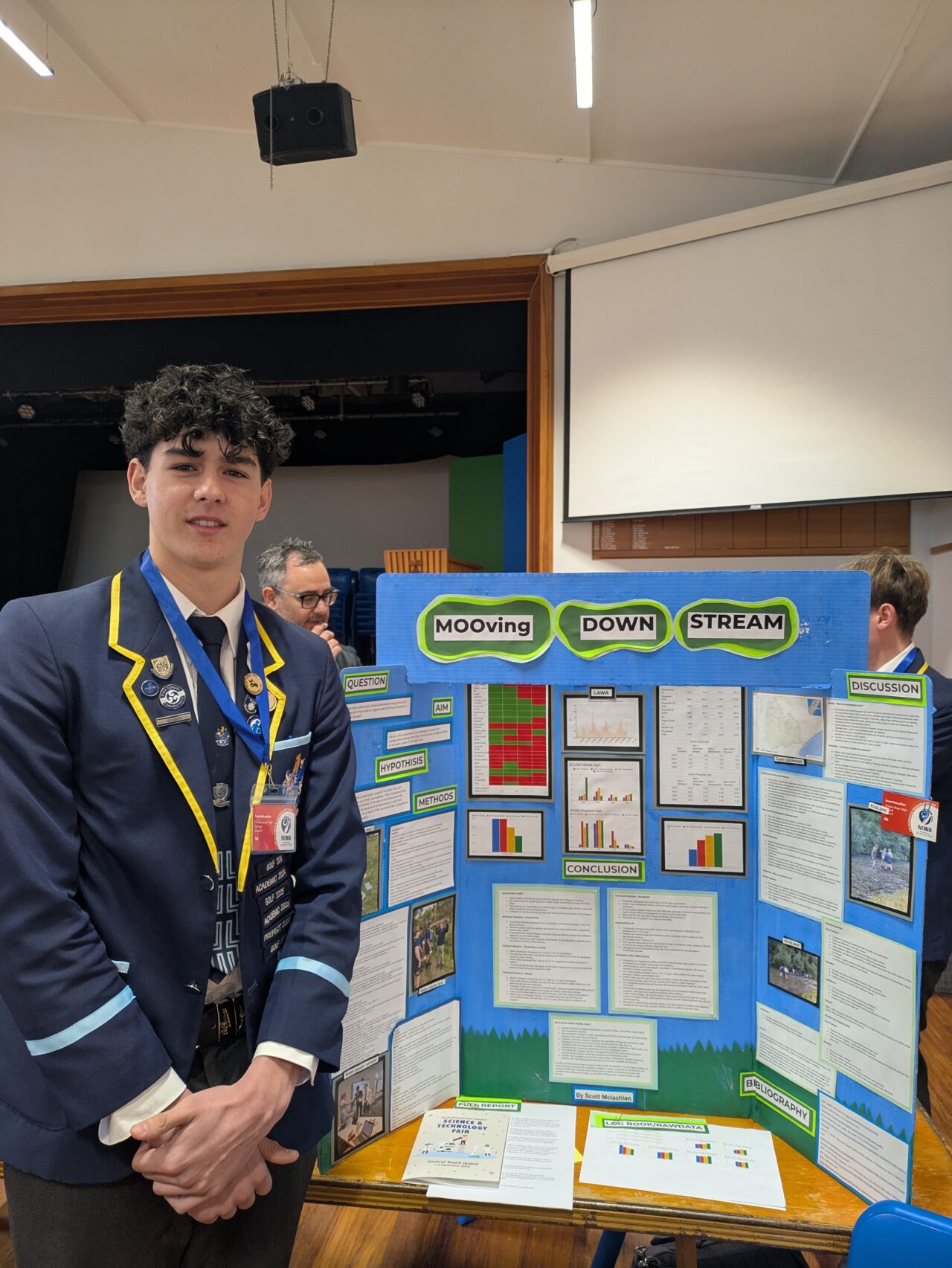
Scott McLachlan |
MOOving down Stream |
Timaru Boys’ High School |
|
2nd |
Class 5 |
William Bowman |
Water Quality in the Opihi River |
Timaru Boys’ High School |
|
3rd |
Class 5 |
Dawson McCall |
Seed Germination |
Timaru Boys’ High School |
|
4th |
Class 5 |
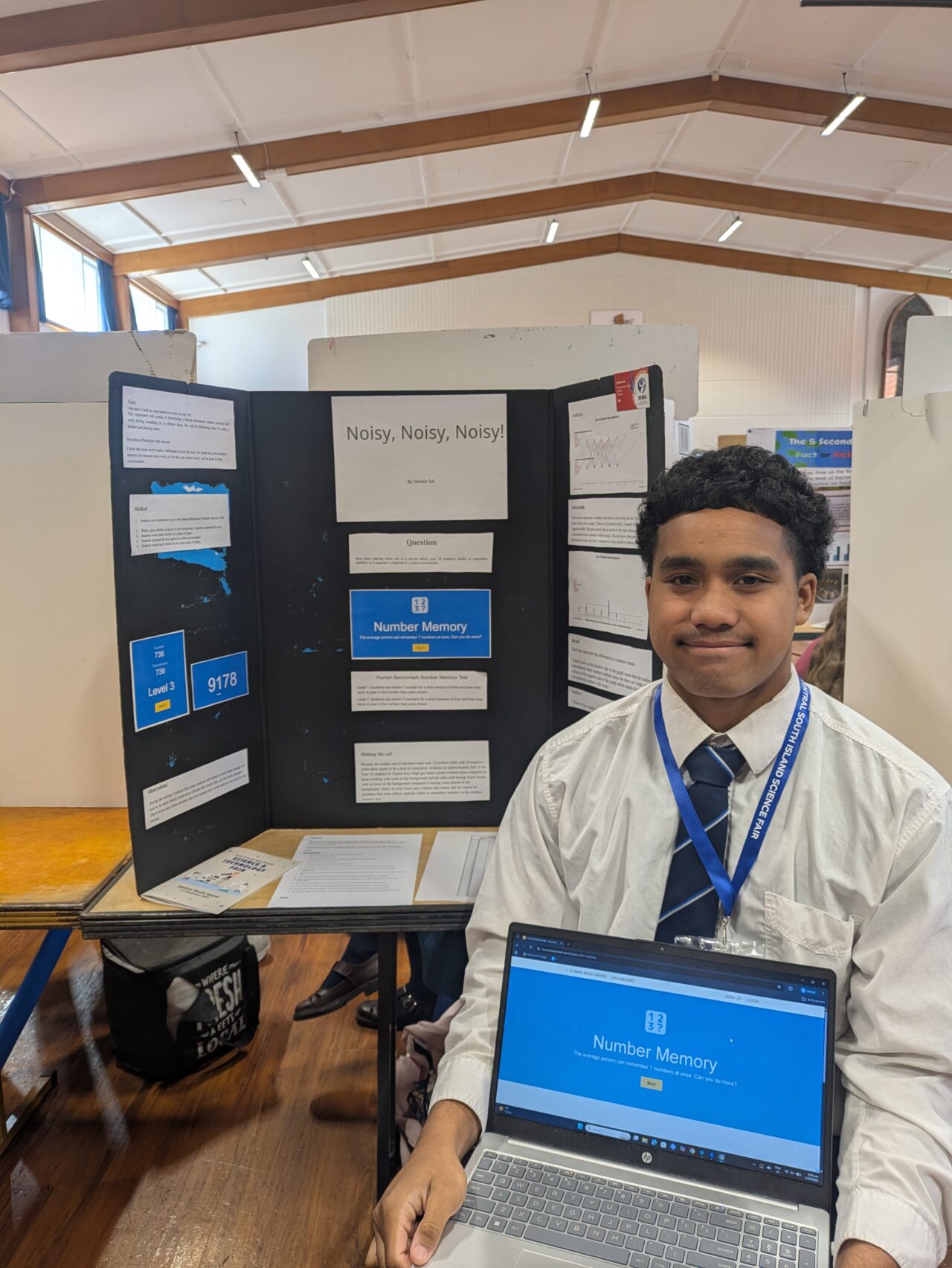
Taniela Tuli |
Noise Level in Classroom |
Timaru Boys’ High School |
Special Prizes
Opuha Water
|
Prize |
Year |
Student/students |
Project Title |
School |
|
Senior 1st = |
13 |
Scott McLachlan |
MOOving Down Stream |
Timaru Boys’ High School |
|
Senior 1st = |
13 |
William Bowman |
Water Quality in the Opihi River |
Timaru Boys’ High School |
Irricon
|
Prize |
Year |
Student/students |
Project Title |
School |
|
1st |
Year 8 |
Hetty Oldham |
Battle of the Filters |
Ashburton Intermediate School |
|
2nd |
Year 13 |
Scott McLachlan |
MOOving Down Stream |
Timaru Boys’ High School |
Environment Canterbury
|
Prize |
Year |
Student/students |
Project Title |
School |
|
1st = Senior |
Year 13 |
Scott McLachlan |
MOOving Down Stream |
Timaru Boys’ High School |
|
1st = Senior |
Year 13 |
William Bowman |
Water Quality in the Opihi River |
Timaru Boys’ High School |
|
3rd Senior |
||||
|
1st Junior |
Year 8 |
Celeste Hahn |
Ready for the Shakes Before it Breaks |
Ashburton Intermediate School |
|
2nd Junior |
Year 8 |
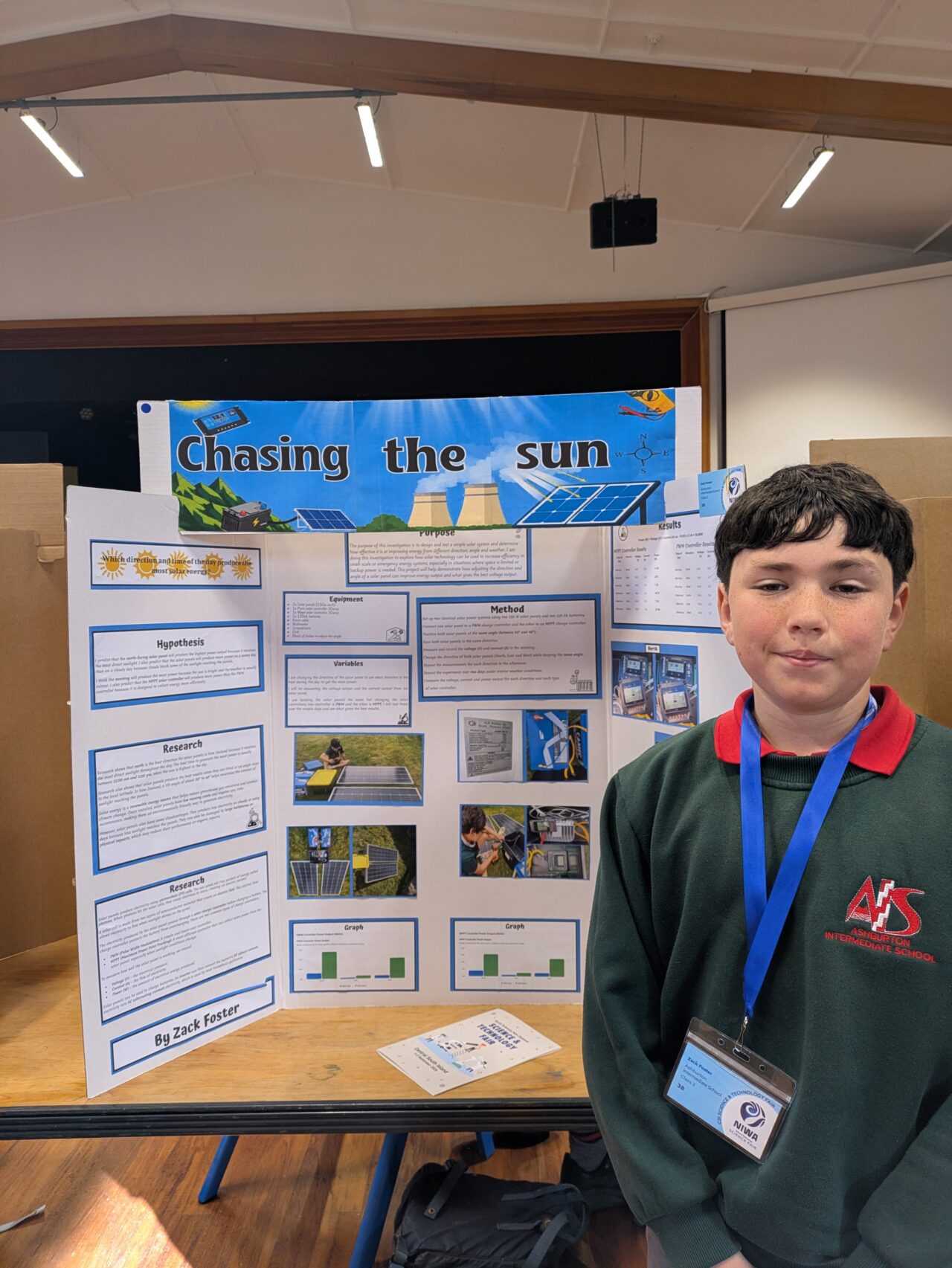
Zack Foster |
Chasing the Sun |
Ashburton Intermediate School |
|
3rd Junior |
Year 8 |
Hetty Oldham |
Battle of the Filters |
Ashburton Intermediate School |
Sport
|
Prize |
Year |
Student/students |
Project Title |
School |
|
1st |
Year 7 |
Harry Simpson |
Flying Pellets |
Ashburton Intermediate School |
|
2nd |
Year 7 |
Micah Woods |
The Good, The Bad and The Ugly |
Ashburton Intermediate School |
|
3rd |
Class 6 |
Max Guinan & Coby Hansen |
Shin Guards |
Barton Rural School |
Technology
|
Prize |
Year |
Student/Students |
Project Title |
School |
|
1st |
Year 8 |
Celeste Hanh |
Ready for the Shakes before it Breaks |
Ashburton Intermediate School |
NZ Statistics
|
Prize |
Year |
School |
Project Title |
Student/students |
|
1st |
Year 13 |
Timaru Boys’ High School |
MOOving Down Stream |
Scott McLachlan |
|
2nd |
Year 8 |
Ashburton Intermediate School |
Leaf it to Science |
Georgia Guthrie |
Agriculture
|
Prize |
Year |
School |
Project Title |
Student/students |
|
1st |
Year 7 |
Ashburton Intermediate School |
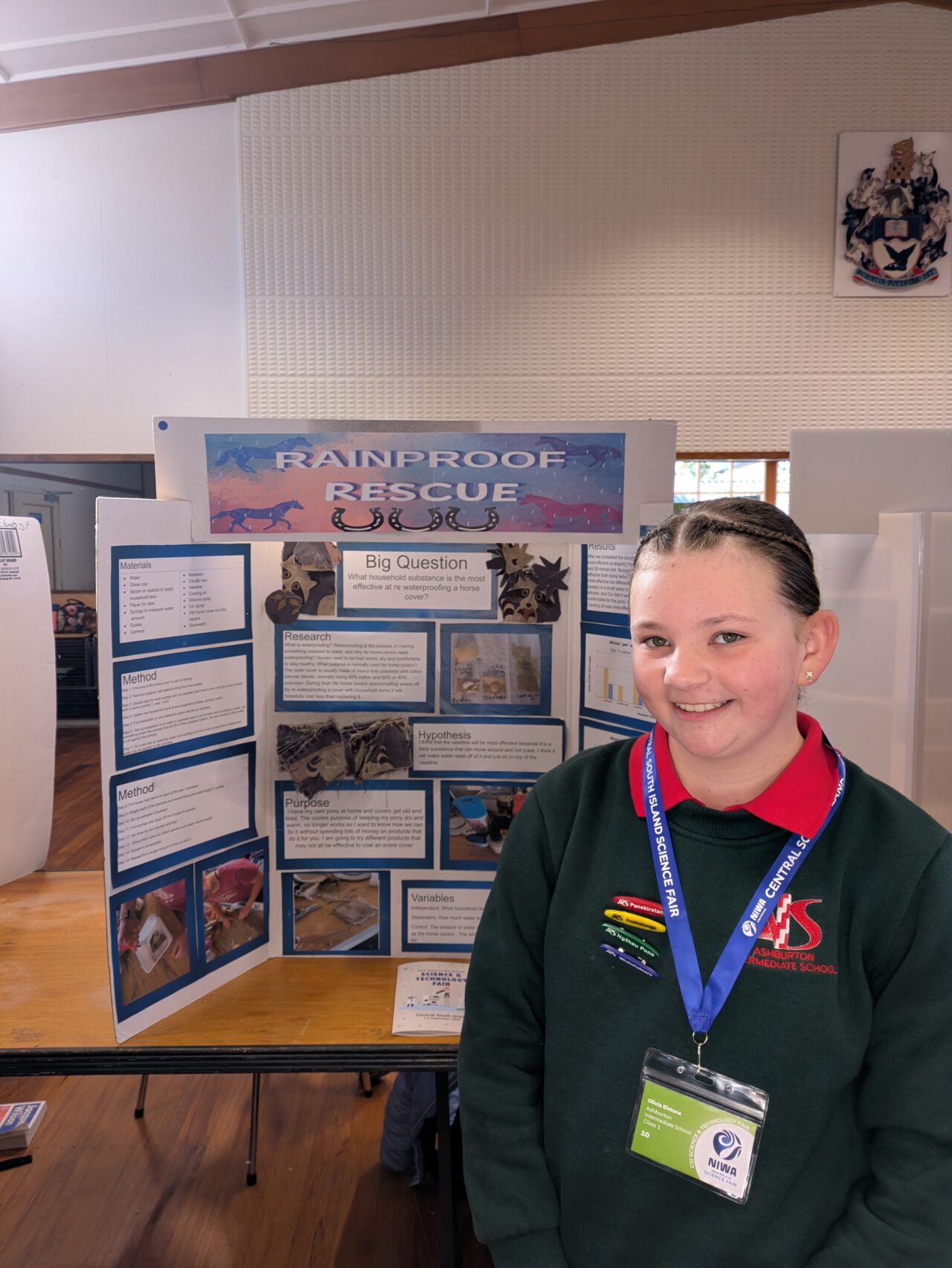
Rainproof Rescue |
Olivia Elstone |
|
2nd |
Year 7 |
Beaconsfield School |
Chicks-4-Lay |
Caitlyn Powell |
BIRT
|
Prize |
Year |
School |
Project Title |
Student/students |
|
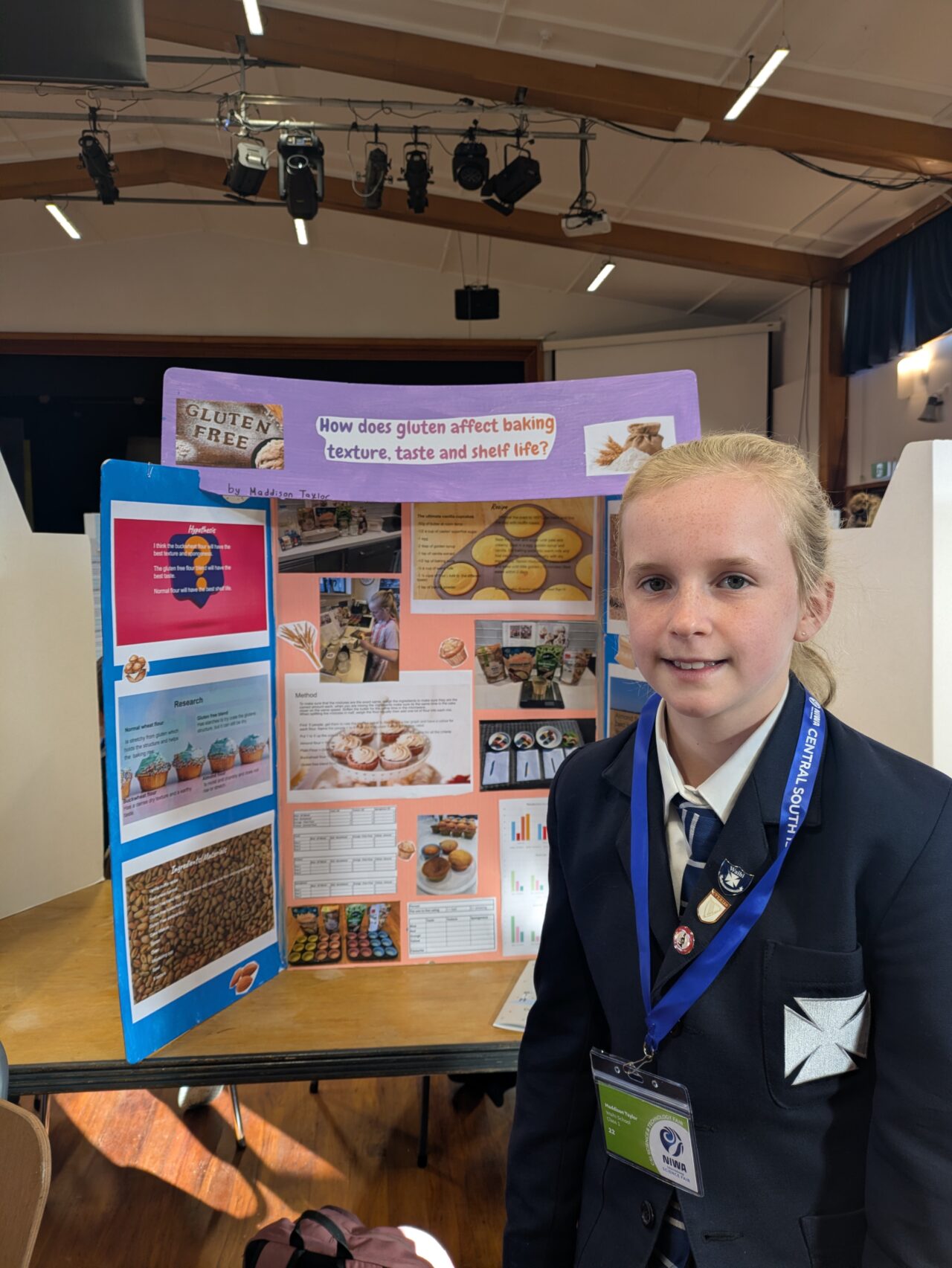
1st |
Year 7 |
Waihi School |
How does gluten affect baking texture, taste and the shelf life? |
Maddison Taylor |
Barkers
|
Prize |
Year |
School |
Project Title |
Student/students |
|
1st |
Year 7 |
Craighead Diocesan |
How Will the Cookie Crumble |
Zoe Jackson and Annie Scott |
|
2nd |
Year 8 |
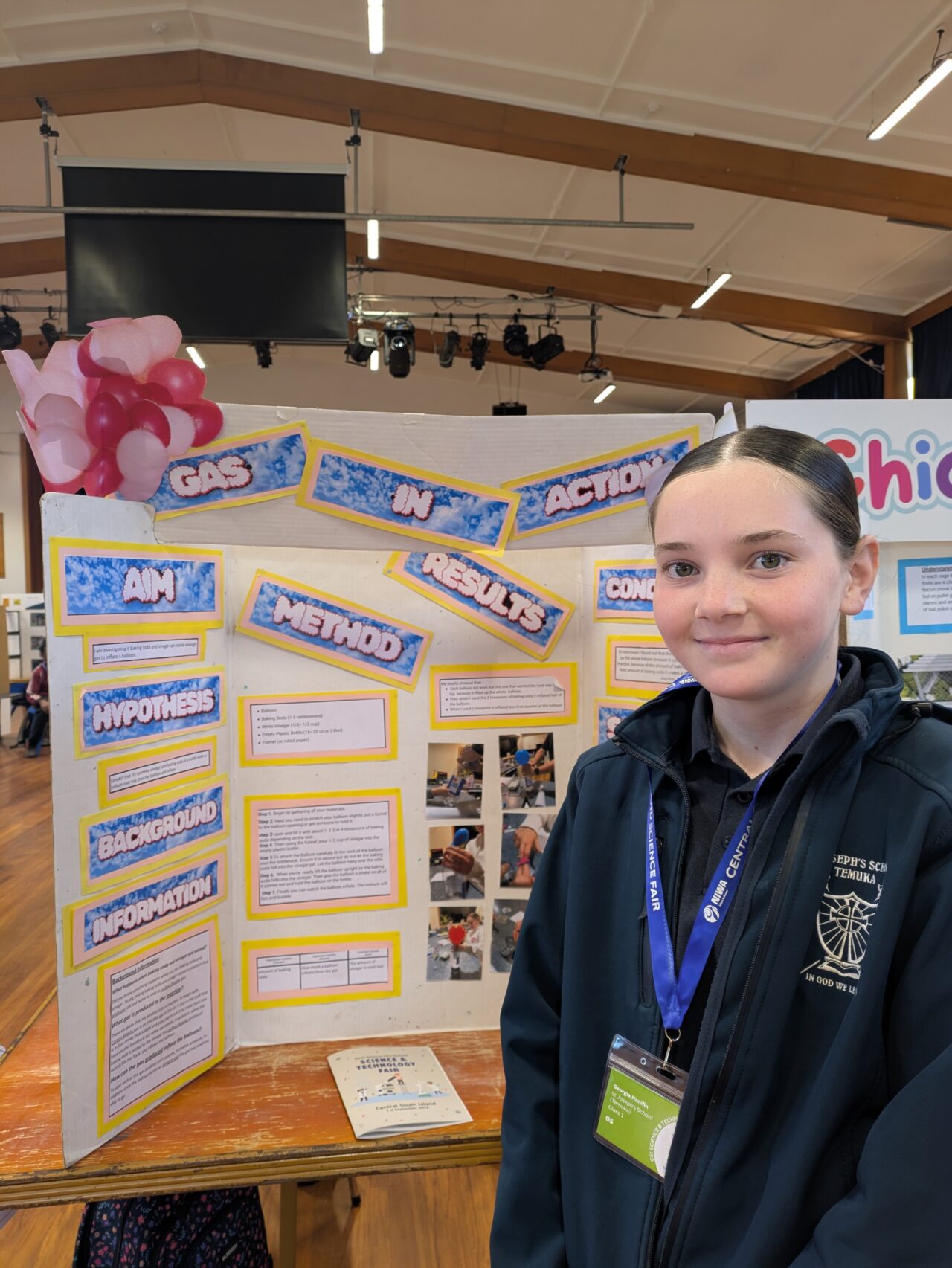
St Joseph’s School Temuka |
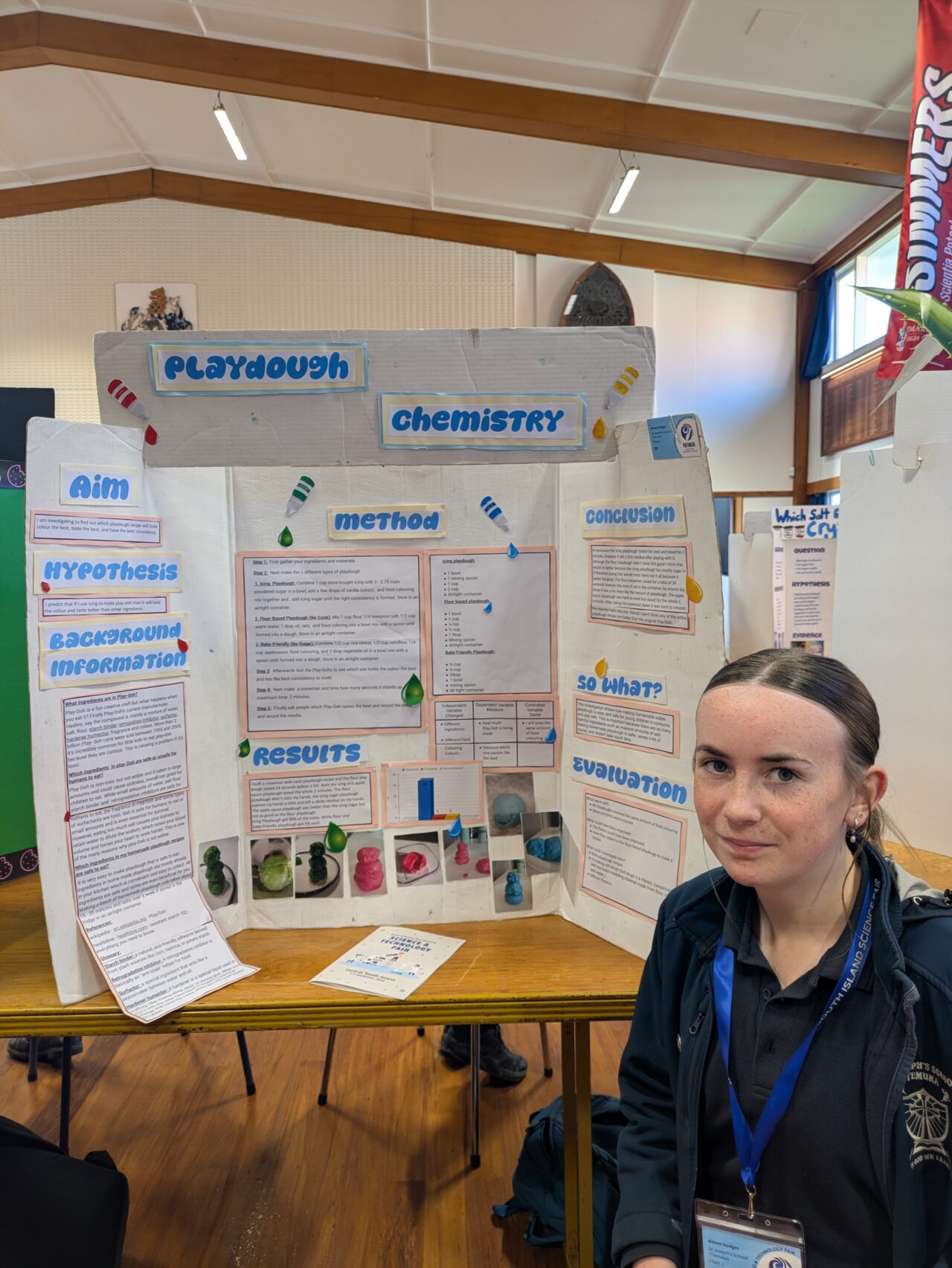
Playdough Chemistry |
Aimee Hodges |
Arrowhenua
|
Prize |
Year |
School |
Project Title |
Student/students |
|
Enthusiasm |
Year 7 |
Beaconsfield School |
Psychology of Phishing |
Ryan Gale |
|
Originality |
Year 7 |
Barton Rural School |
Hay or Nay |
Tia Beveridge |
|
Environmental |
Year 8 |
Mackenzie |
Trash to Toasty |
Keegan Roughton |
|
Women in Stem |
Year 8 | Ashburton Intermediate School | Paw-Sitively Toasty | Bethany Lowe |
|
Women in Stem |
Year 8 |
Ashburton Intermediate School |
Ready for the Shakes before it breaks |
Celeste Hahn |
Observational Drawnings
|
Prize |
Year |
School |
Project Title |
Student/students |
|
Junior 1st |
Year 8 |
Gleniti School |
Seahorse |
Sophie Walker |
|
Junior 2nd |
Year 8 |
St Joseph’s Temuka |
Shell |
Mya Archibald |
|
Senior 1st |
Waimate High School |
Mobula Alfredi |
Elsie Cooney |
|
|
Senior 2nd |
Class 9 |
Waimate High school |
Whale Shark |
Eva Jordanovska |
Senior Scientific Wall Chart
|
Prize |
Year |
School |
Project Title |
Student/students |
|
1st |
Class 11 |
Waimate High School |
Quantum Physics |
Harry Sleigh |